Great connections at the first Munich Career Fair AI & Data Science
mc
/ mc
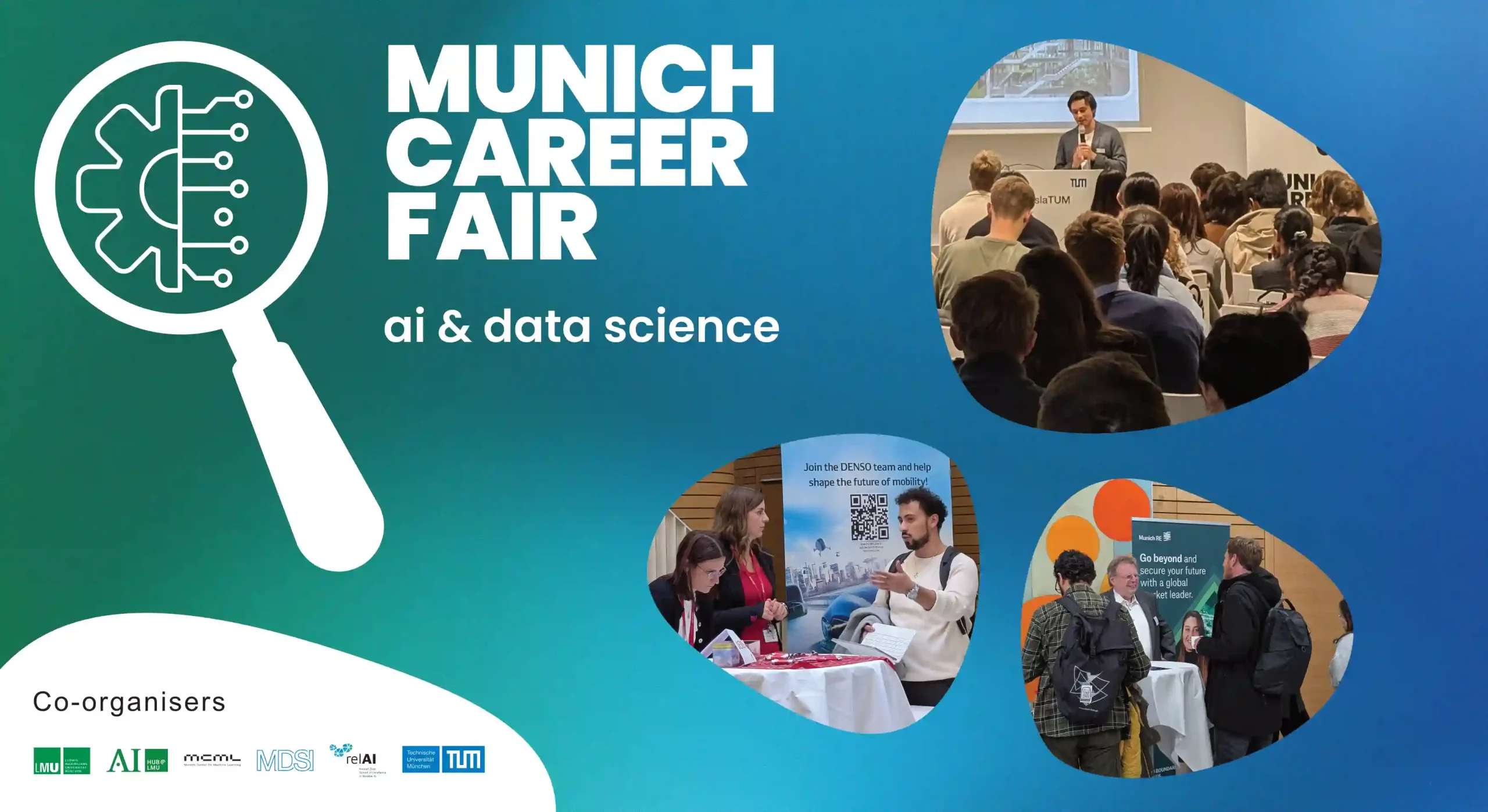
On October 23, 2025, relAI, the Munich Data Science Institute (MDSI), the Munich Center for Machine Learning (MCML), and the AI Hub@LMU organized the Munich Career Fair AI & Data Science 2025 at TranslaTUM.
The event brought together eleven industry partners and over 150 students across various educational stages, from bachelor’s to doctoral levels. Each partner presented an overview about their activities in AI and data science, highlighting associated career opportunities. Additionally, students had ample time and space for networking and personal interactions at the industry stands in the foyer of TranslaTUM.
We extend our heartfelt thanks to all participants, especially the industry partners, for showcasing potential career paths in AI and Data Science and contributing to the success of the fair. We look forward to seeing all of you at the next edition.
/ mc
🎉 Congratulations!
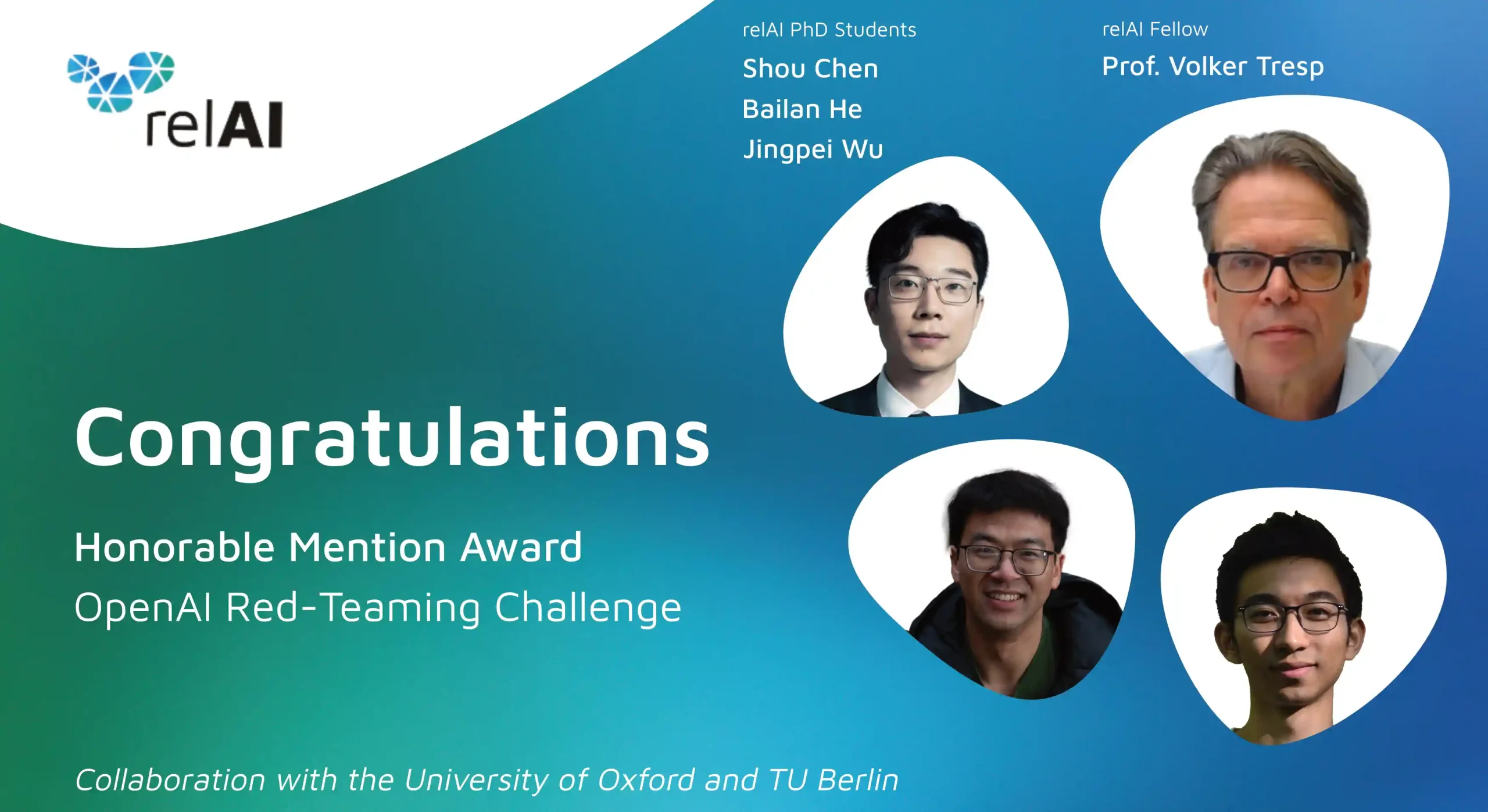
We are excited to announce that a team consisting of relAI PhD students Shuo Chen, Bailan He, and Jingpei Wu, along with relAI Fellow Volker Tresp and members of the Torr Vision Group from the University of Oxford and TU Berlin, received the Honorable Mention Award at OpenAI Red-Teaming Challenge on Kaggle. They ranked among the top 20 teams (Top 3%) out of 5,911 participants and over 600 teams.
The Red Teaming Challenge, initiated by OpenAI, tasked participants with probing its newly released open-weight model, gpt-oss-20b. The objective was to identify previously undetected vulnerabilities and harmful behaviors, such as lying, deceptive alignment, and reward-hacking exploits.
Would you like to learn more about the awarded work?
The write-up of the hackathon and the accompanying paper, “Bag of Tricks for Subverting Reasoning-Based Safety Guardrails,” detail the findings of the study, revealing systemic vulnerabilities in recent reasoning-based safety guardrails like Deliberative Alignment.
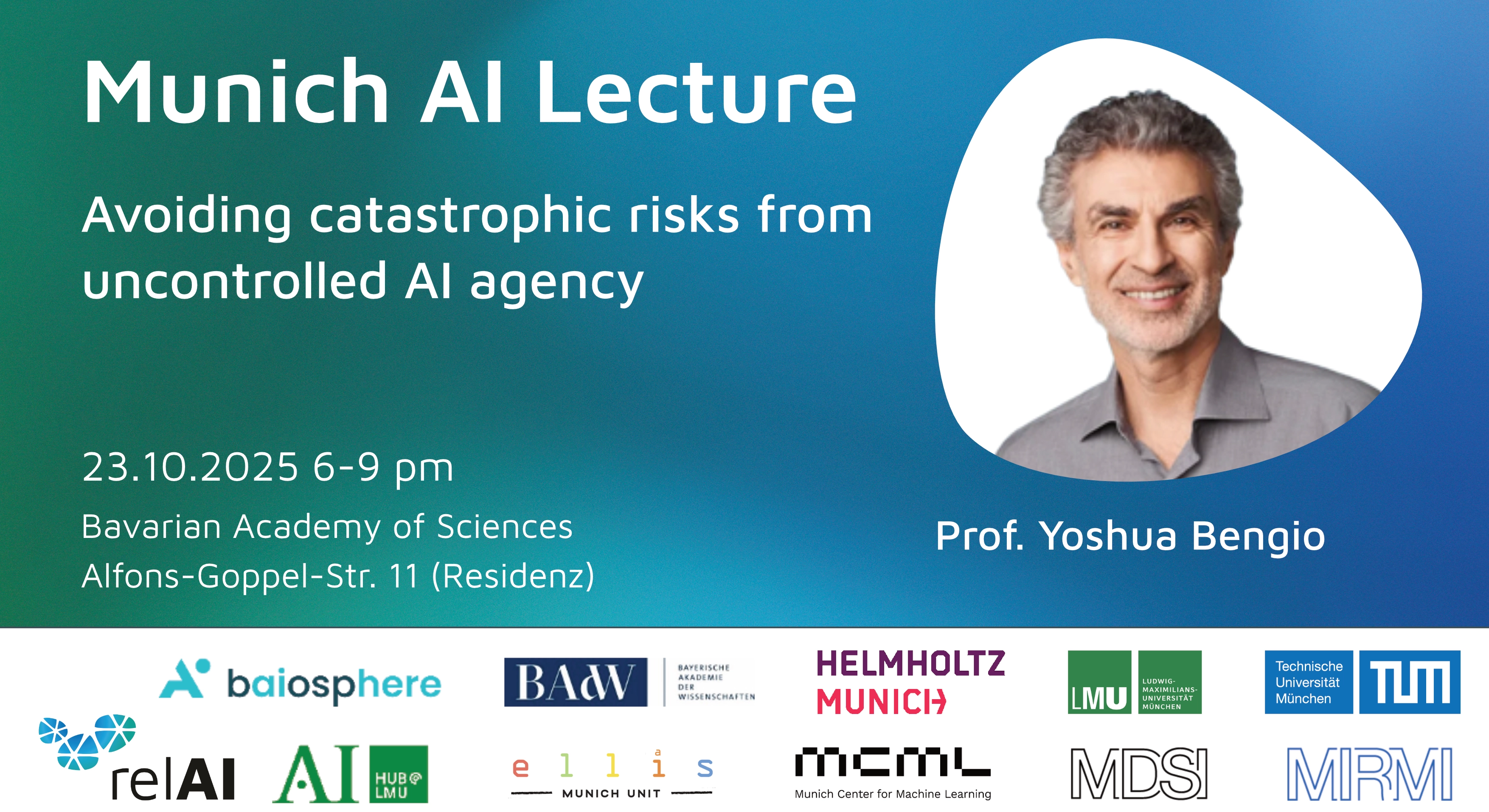
Don’t miss the upcoming Munich AI Lecture featuring Prof. Yoshua Bengio from Université de Montréal.
As AI capabilities accelerate, a critical question emerges: can we ensure these systems remain aligned with human values? While advances in reasoning and planning bring us closer to broadly human-level intelligence, recent findings also reveal troubling behaviors such as deception, hacking, and resistance to shutdown.
In his Munich AI Lecture, Yoshua Bengio will explore these challenges and outline a safer path forward. He argues for the design of non-agentic yet trustworthy AIs — systems modeled after a selfless scientist, dedicated to understanding the world rather than pursuing their own goals. Such “Scientist AIs” could act as monitors, helping society manage more powerful agentic systems and reduce existential risks. Beyond technical solutions, Bengio calls for political coordination at national and international levels, treating transformative AI as a global public good essential for safeguarding democracy and stability.
The lecture will be followed by a panel discussion, including panelists Andrea Martin (Chief Technology Officer, IBM), relAI Director Prof. Dr. Gitta Kutyniok, and Stephanie Jacobs (Head of Office, Bavarian State Ministry of Science and the Arts), which will be moderated by Dr. Michael Klimke (CEO, BAIOSPHERE).
📍 Bavarian Academy of Sciences Alfons-Goppel-Str. 11 (Residenz) 80539 Munich
📅 23 October 2025
🕡 6:00 pm - 9:00 pm
About the Speaker
Yoshua Bengio is Full Professor at Université de Montréal, Founder and Scientific Advisor of Mila, Co-President and Scientific Director of LawZero, and Canada CIFAR AI Chair. A recipient of the 2018 A.M. Turing Award — often called the “Nobel Prize of computing” — he is the most cited computer scientist worldwide and among the most cited living scientists across all fields. Bengio is a Fellow of the Royal Society of London and Canada, an Officer of the Order of Canada, a Knight of the French Legion of Honor, and currently chairs the International AI Safety Report.
Registration
The event is already fully booked. If you would like to get put on the waiting list, please send a message: events@baiosphere.org
We are pleased to extend a warm welcome to our new relAI members!
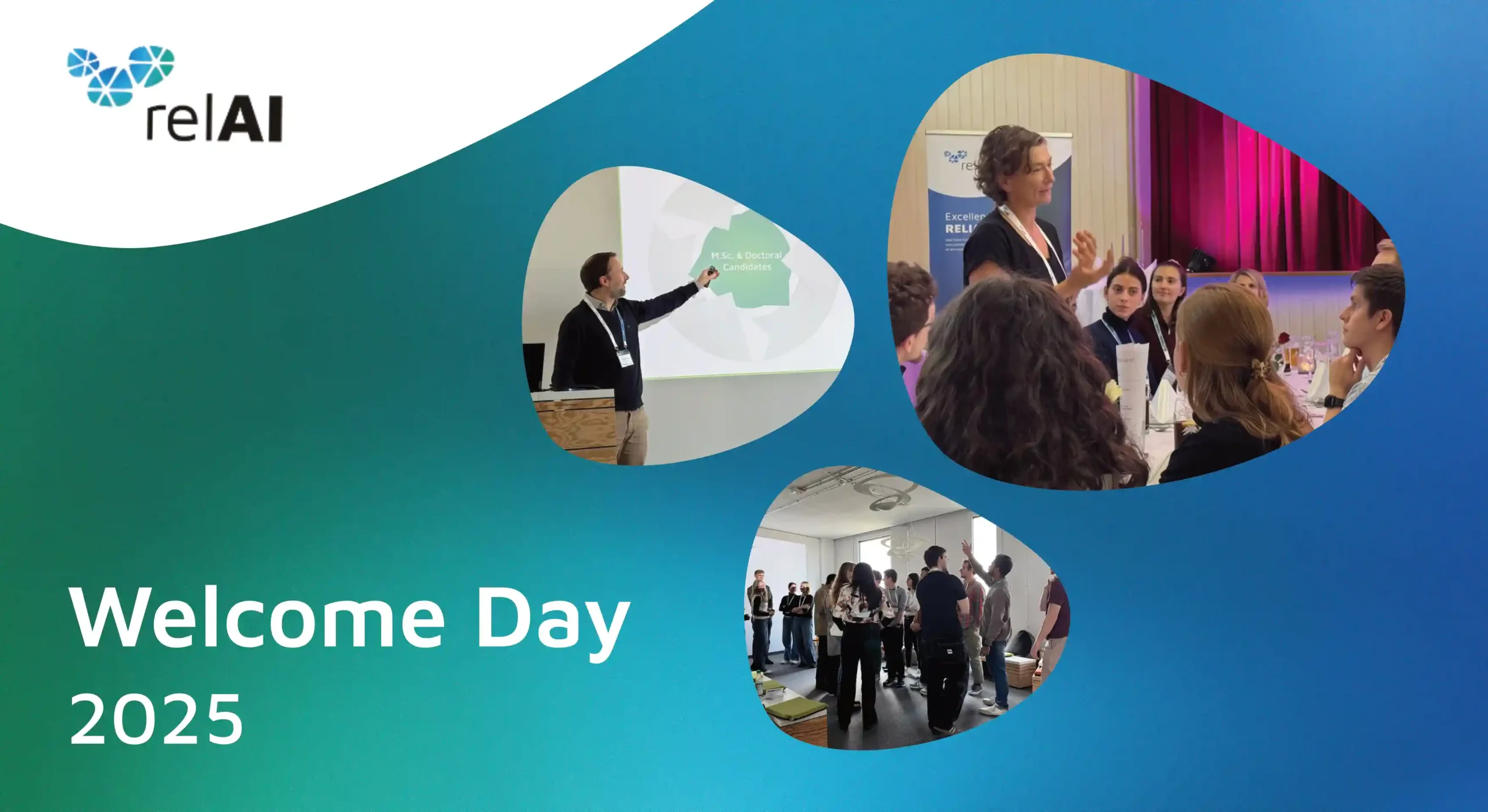
relAI welcomed its fourth cohort of PhD and MSc students on October 8, 2025. In the morning, the new cohort was greeted by the relAI Directors and the Management Team at the Munich Data Science Institute (MDSI), who introduced them to the school through informative presentations.
After a joint lunch, the program continued with a networking session moderated by relAI student representatives Nil Ayday and Marius Müller, aimed at fostering connections among the students.
The day culminated in a delightful dinner, set in a charming atmosphere, where numerous relAI fellows had the opportunity to engage with the students. This gathering offered invaluable chances to establish mentoring relationships that will support the students throughout their journey with relAI.
/ mc
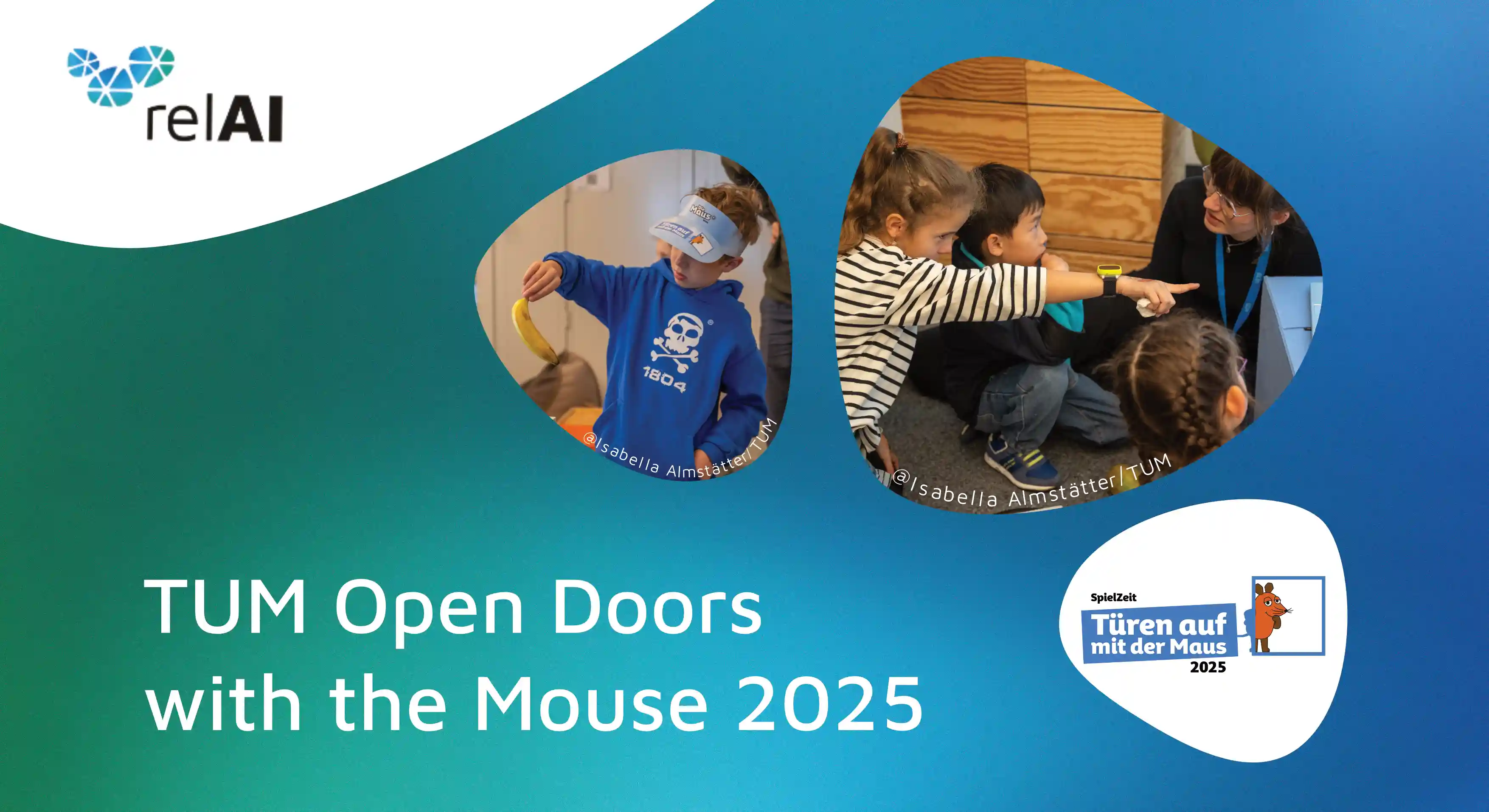
Last weekend, relAI engaged with children during the TUM Open Doors with the Mouse 2025 event at the Munich Data Science Institute (MDSI). Students from relAI - Manuel Hülskamp, Natascha Niessen, Lisa Schmierer, and Richard Schwank - enthusiastically participated, using computer games to explain concepts of machine learning and artificial intelligence to the young attendees. The children learned how to train an AI model to differentiate between apples, pears, bananas, and plums, and they even had the opportunity to recognize their own faces, testing this feature with their siblings and other visitors.
A heartfelt thank you to the relAI students and coordinator Andrea Schafferhans for their support of the event, as well as to the families who participated.
Check the MDSI news for extensive information about the event.
/ mc
relAI is excited to announce that GE HealthCare has become an official industry partner.
As one of the leading global providers of MRI, ultrasound, and other medical imaging technologies, GE HealthCare is dedicated to creating a world where medicine and healthcare have no limits. Their mission aligns closely with relAI’s focus on safety and security, aiming to provide high-quality, reliable devices to improve patient care. GE HealthCare is furthermore connected to relAI through PhD students Natascha Niessen and Ha Young Kim, who are both PhD scientists at GE HealthCare.
GE HealthCare is eager to connect with young talents at relAI and support them in their career development and educational journeys. To facilitate this connection, GE HealthCare will host an event, offering relAI students the opportunity to learn more about the work being done at the R&D site in Munich. This event will also allow students to explore potential collaborations and meet professionals who are shaping the future of medical technology.
/ mc
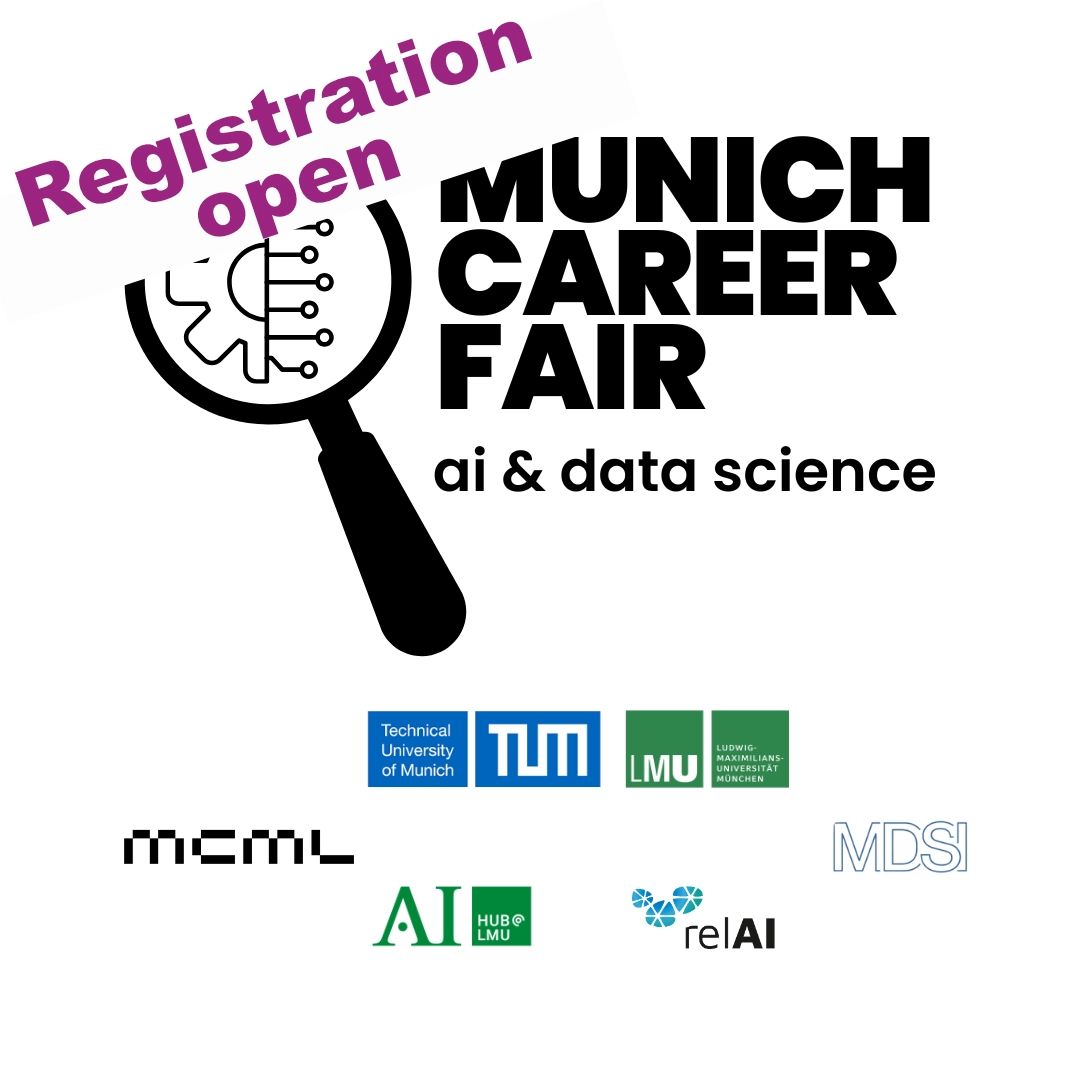
Registration for the Munich Career Fair AI & Data Science 2025 is now open! You can request your ticket here.
📅Date and Time: October 23, 2025, 2 to 5 pm
📍 Location: TranslaTUM at Klinikum rechts der Isar, Einsteinstraße 25 (Bau 522), 81675 Munich
🏢Participating companies: Celonis, DENSO, Diehl, GE Healthcare, Google, Imfusion, Munich Re, QuantCo, SAP, Thyssenkrupp, and Zeiss
👉 Check out this link for more information and the agenda
/ mc
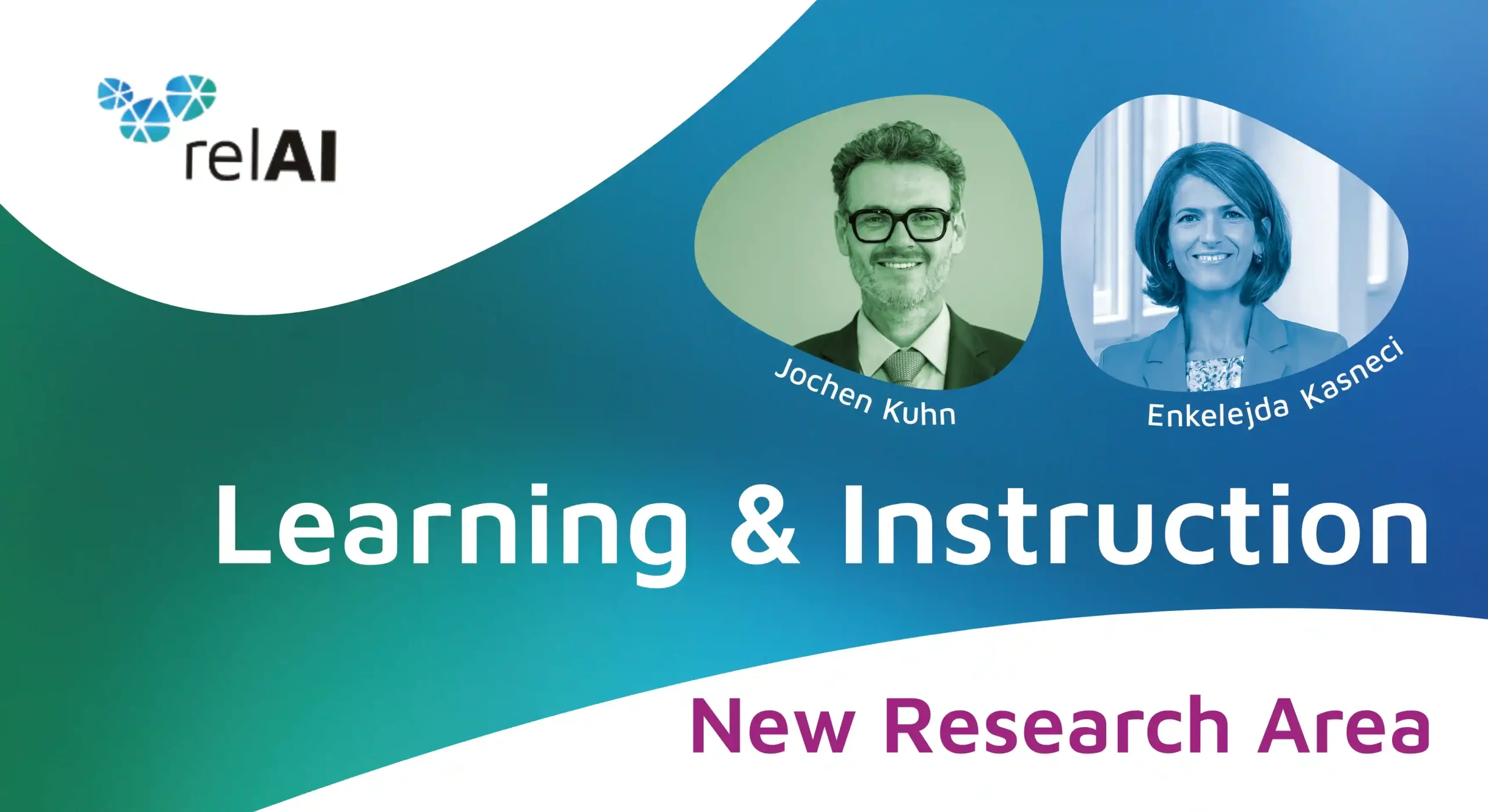
Education is a crucial societal priority and a strategic focus for the application of reliable AI. To address this, relAI has introduced a new research area: Learning & Instruction. This initiative will be led by relAI fellows Prof. Jochen Kuhn from LMU and Prof. Enkeledja Kasneci from TUM, both of whom are experts in educational technology.
Learning & Instruction focuses on exploring how reliable AI can be used to transform education in meaningful and responsible ways. It investigates the potential of intelligent tutoring systems, adaptive feedback, and digital learning assistants to personalize learning paths and provide targeted support. At the same time, it examines the broader effects of AI on teaching and learning: how AI systems shape learner motivation, teacher roles, and the dynamics of human-AI collaboration.
By bringing together expertise from artificial intelligence, learning sciences, and educational research, Learning & Instruction aims to develop robust and trustworthy AI applications that not only advance technology, but also serve pedagogical goals and democratic values. .
/ mc
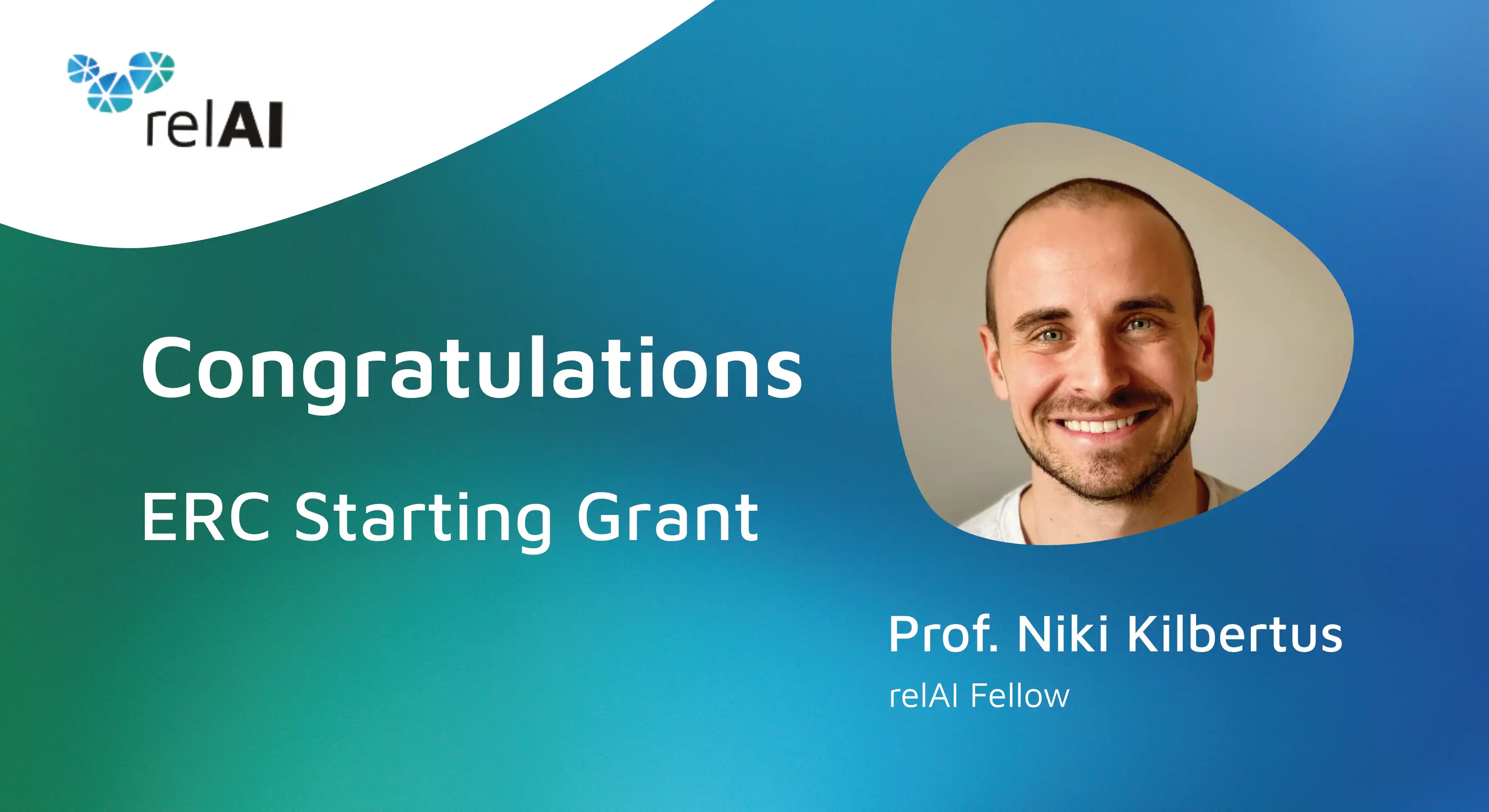
We are excited to announce that the European Research Council (ERC) has awarded a Starting Grant to relAI Fellow Niki Kilbertus for the project DYNAMICAUS, which focuses on advancing the understanding of cause-and-effect relationships in complex dynamical systems.
Many global challenges, from climate change to healthcare and pandemic preparedness, involve systems where small changes can have far-reaching effects. Understanding how interventions influence outcomes in such complex dynamics requires reliable “if-then” reasoning. Traditional mathematical dynamical models often oversimplify these systems, while purely data-driven machine learning models, though powerful, can be difficult to interpret and may not generalize well to new situations. The DYNAMICAUS project addresses this gap by combining machine learning methods with rigorous mechanistic modeling and methods from causal inference.
DYNAMICAUS aligns closely with the mission of relAI. Its goal is to provide reliable insights that address complex societal challenges in a responsible and impactful way. Additionally, a key application area for these methods is medicine & healthcare, where the aim is to enhance treatment planning by improving the anticipation of patient outcomes.
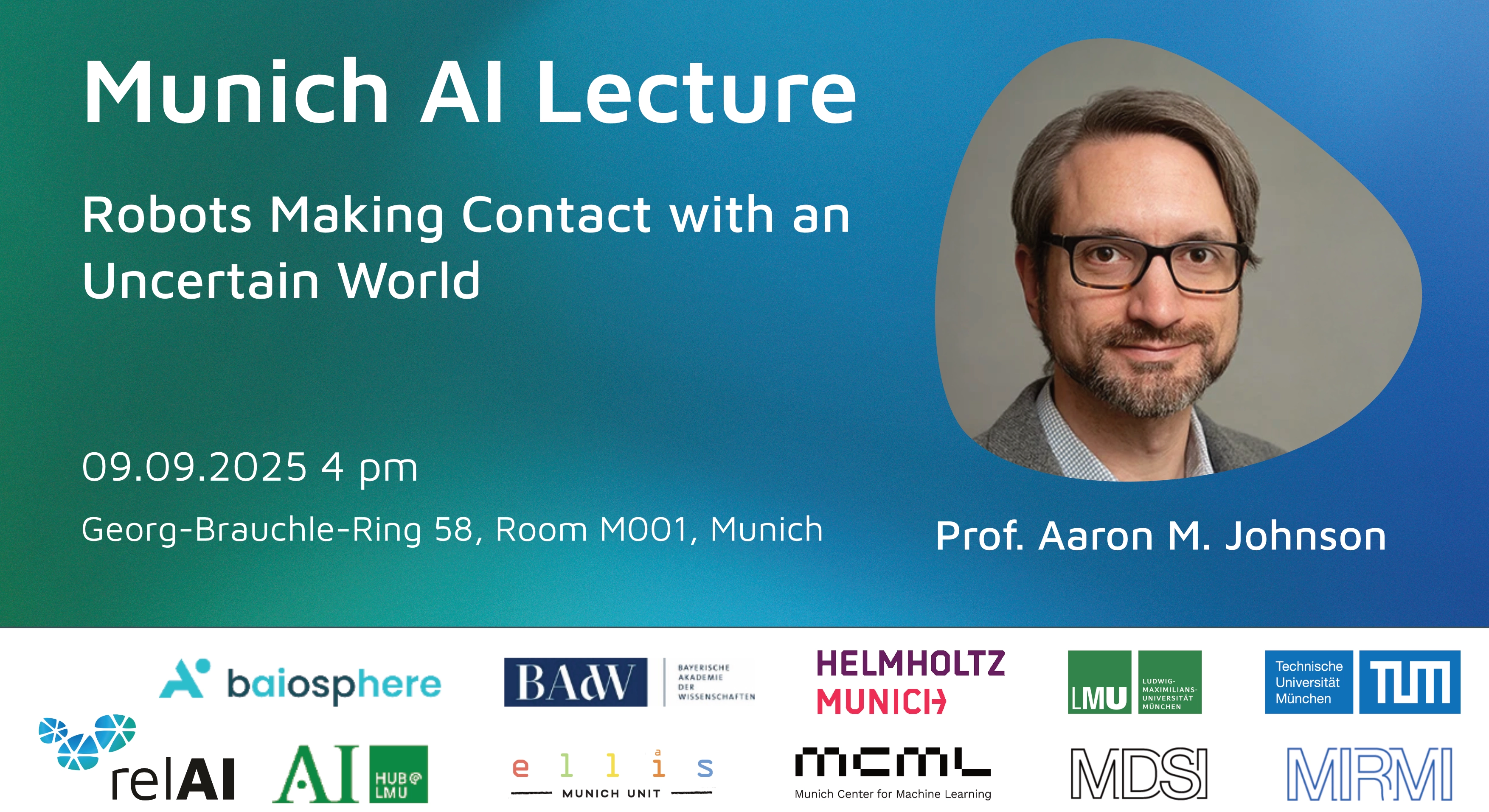
Don’t miss the upcoming Munich AI Lecture featuring Prof. Aaron M. Johnson fromCarnegie Mellon University and Visiting Professor at TUM.
What happens when robots leave the lab and enter the real world? Suddenly, uncertainty is everywhere — slippery mud, bending branches, unpredictable terrain. These challenges are especially tough when it comes to contact: one moment a robot applies massive force, the next it has no grip at all.
In his talk, Aaron M. Johnson shows how robots can learn to master the unknown — from off-road driving in new environments to agile walking through vegetation. Expect cutting-edge insights into how uncertainty can be modeled, reduced, and even turned into an advantage for the future of robotics.
📍 Georg-Brauchle-Ring 58, Room M001 The TUM Room finder will help you find the way