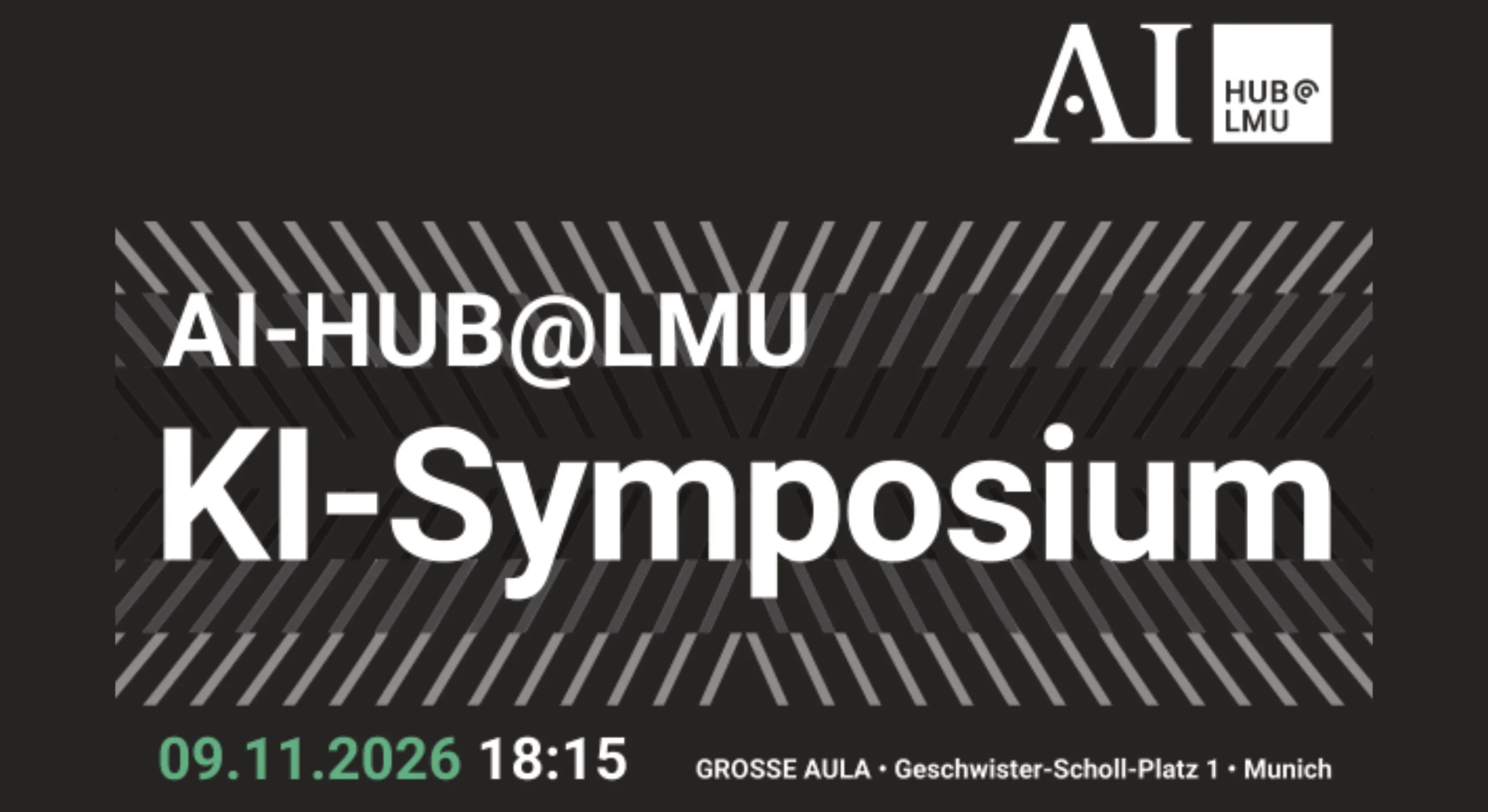
On November 9, 2026, starting at 6:15 PM, the annual LMU AI Symposium will be held in the Great Hall (Große Aula) of LMU Munich. This event is organized by AI-HUB@LMU in collaboration with relAI and will be followed by a reception in the Lichthof. We anticipate welcoming approximately 500 guests from academia, industry, politics, and society.
As in previous years, a central highlight will be the pitch talks by our newly appointed AI professors, showcasing the breadth and diversity of AI research at LMU.
We would be delighted to welcome many of you to this event!
/ mc
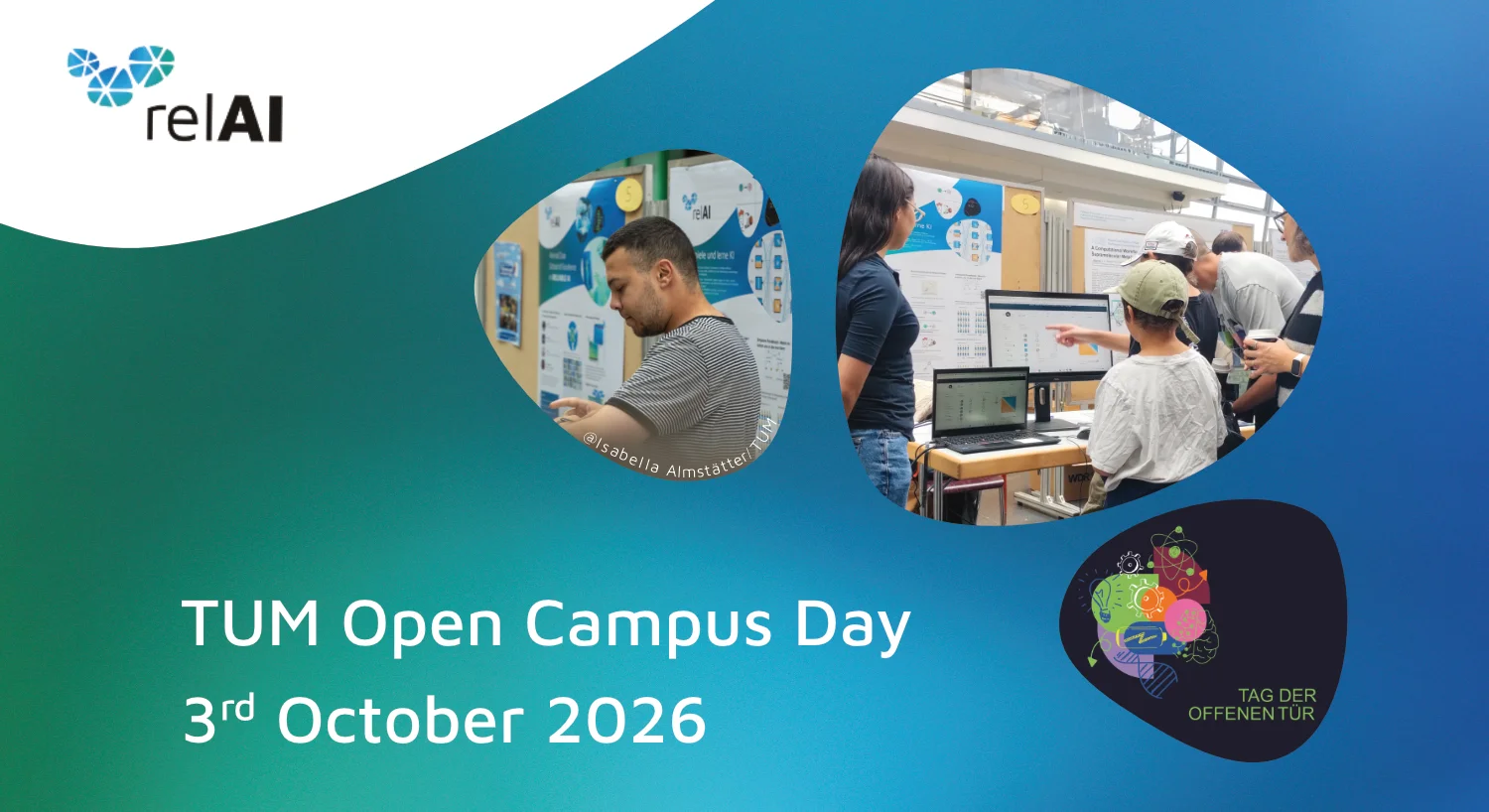
As in the previous edition, relAI was present this year at the TUM Open Campus Day at Forschungscampus Garching on 3rd October 2026.
Throughout the day, a lively mix of visitors—families, students, people of all ages—stopped by our stand, eager to discover what relAI is all about. Guests got hands-on with AI, training their own neural networks and exploring intriguing concepts like Simpson's Paradox and the secrets behind how AI makes decisions.
We are deeply grateful to the organizers, especially Dr. Isabella Almstätter from MDSI and Dr. Gihanna Galindez, whose support made the day possible. A big thank you to the relAI Coordinators, to relAI Student Muhammad ElMahdy for his enthusiasm, and to relAI Students Sameer Ambekar, Julian Balletshofer, Sarah Lumpp, Amine Ketata, Maria Matveev, Daniela Schkoda, and Richard Schwank for providing the games for the event. Most of all, we appreciate everyone who stopped by out of curiosity and joined us on the adventure of exploring AI.
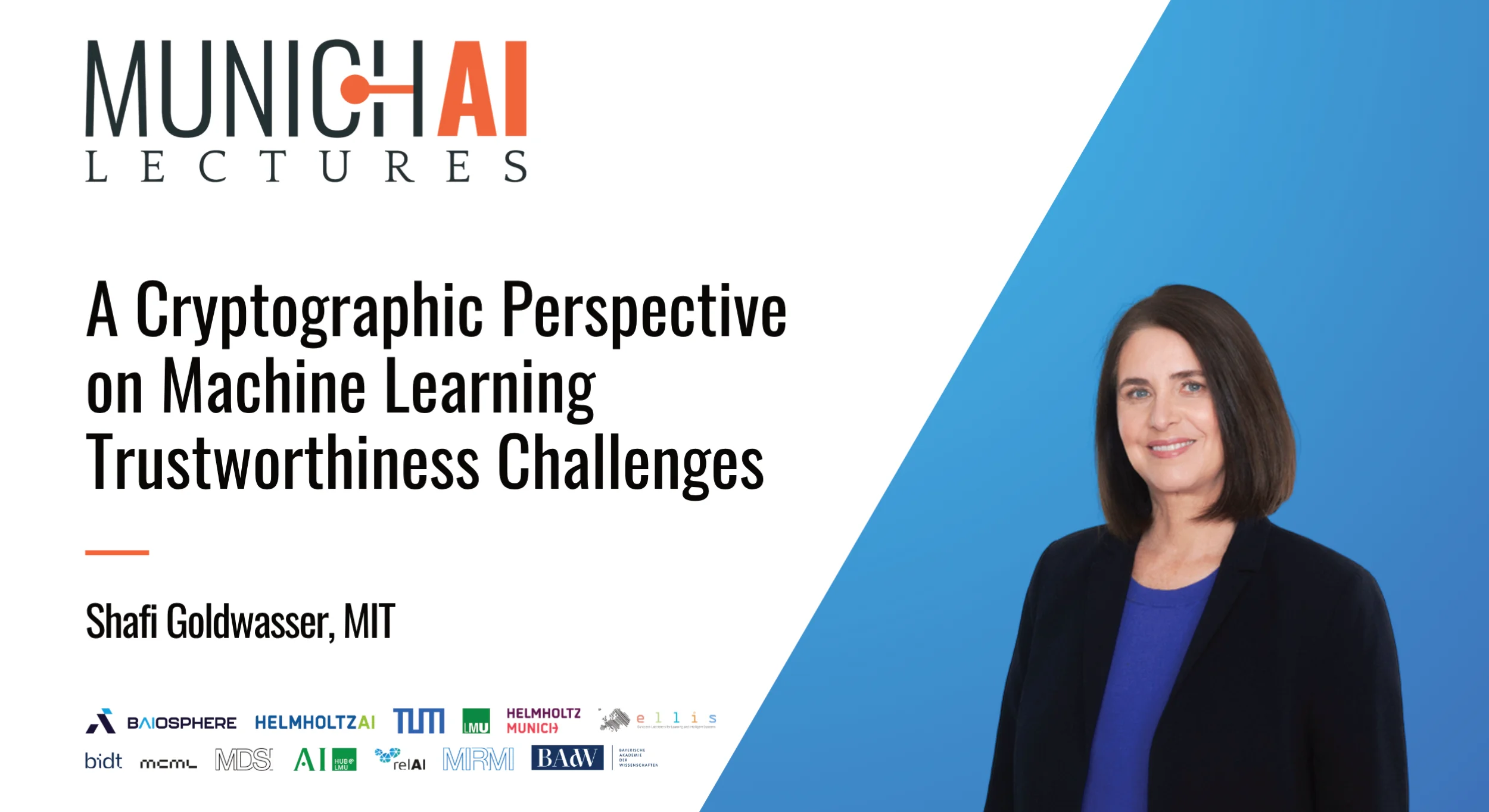
We are excited to announce that Shafi Goldwasser, one of the co-founders of modern cryptography, will share her insights at the upcoming Munich AI Signature Lecture. Don't miss the chance to attend her talk!
Title: A Cryptographic Perspective on Machine Learning Trustworthiness Challenges
📅 Tuesday,October 20, 2026, 6:00 pm
📍 Plenary Hall, Bavarian Academy of Sciences and Humanities (BAdW), Munich
About the Speaker
For her groundbreaking work, Shafi Goldwasser received the ACM Turing Award in 2012, the highest honor in computer science; she has also been awarded two Gödel Prizes and is a member of the National Academy of Sciences and the Royal Society.
About the Lecture
In her lecture, Goldwasser explores how cryptographic methods can contribute to trustworthy machine learning.
For decades, cryptographic tools and models have helped make technology platforms trustworthy, even under worst-case assumptions about potential attackers. Goldwasser demonstrates how methods from cryptography and interactive proofs can be used to address trustworthiness challenges at various stages of the machine learning pipeline.
Additional Information
For more info on the lecture and Prof. Goldwasser, please click here
For any question on your participation please contact Annika Mader, events@baiosphere.org
/ mc
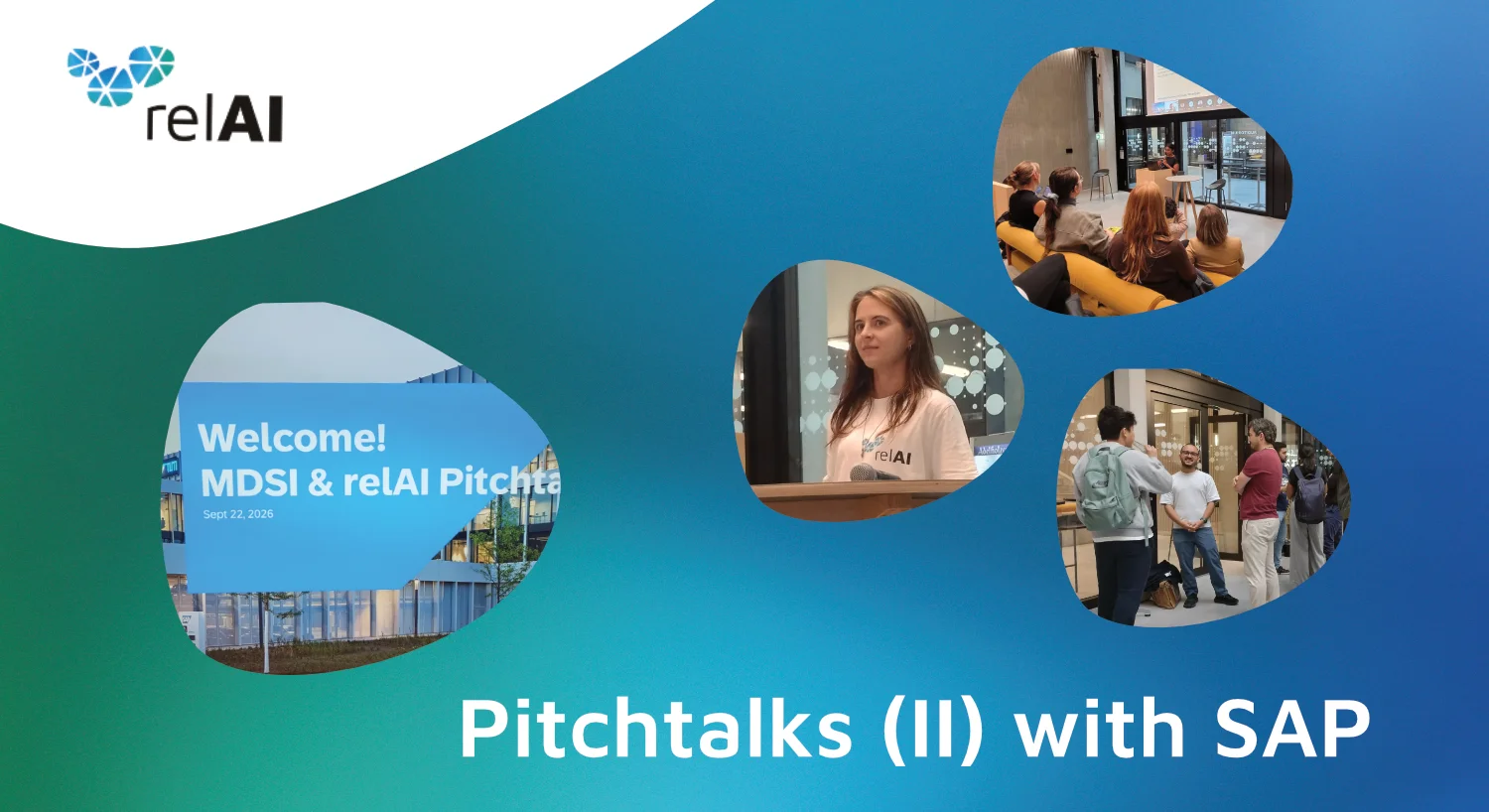
On September 22, researchers from relAI, MDSI, and our industry partner SAP came together at the SAP Labs Munich Campus in Garching for the second edition of our Pitchtalks Session.
The event, chaired by Dr. Tobias Müller (SAP), opened with welcoming remarks from Sylvia Kortüm, Managing Director of MDSI, and Dr. Anja Woracek, the new relAI Coordinator. relAI and MDSI researchers then presented their work, followed by lively discussions and networking opportunities.
🌟Highlights from the scientific presentations included:
• Bhavatarini Kumaravel(MDSI) exploring graph-based deep reinforcement learning for structural design
• Annika Schneider(relAI) presenting research on uncertainty quantification in probabilistic models
• Sameer Ambekar(relAI & MDSI): discussing distribution shifts in vision-language models
🤝 The networking session provided an excellent opportunity for researchers and industry experts to exchange ideas, discuss current and emerging challenges in AI, and explore future collaborations.
A big thank you to SAP for hosting and organizing this inspiring event. We look forward to continuing to strengthen the connection between cutting-edge AI research and industry practice in future editions.
/ mc
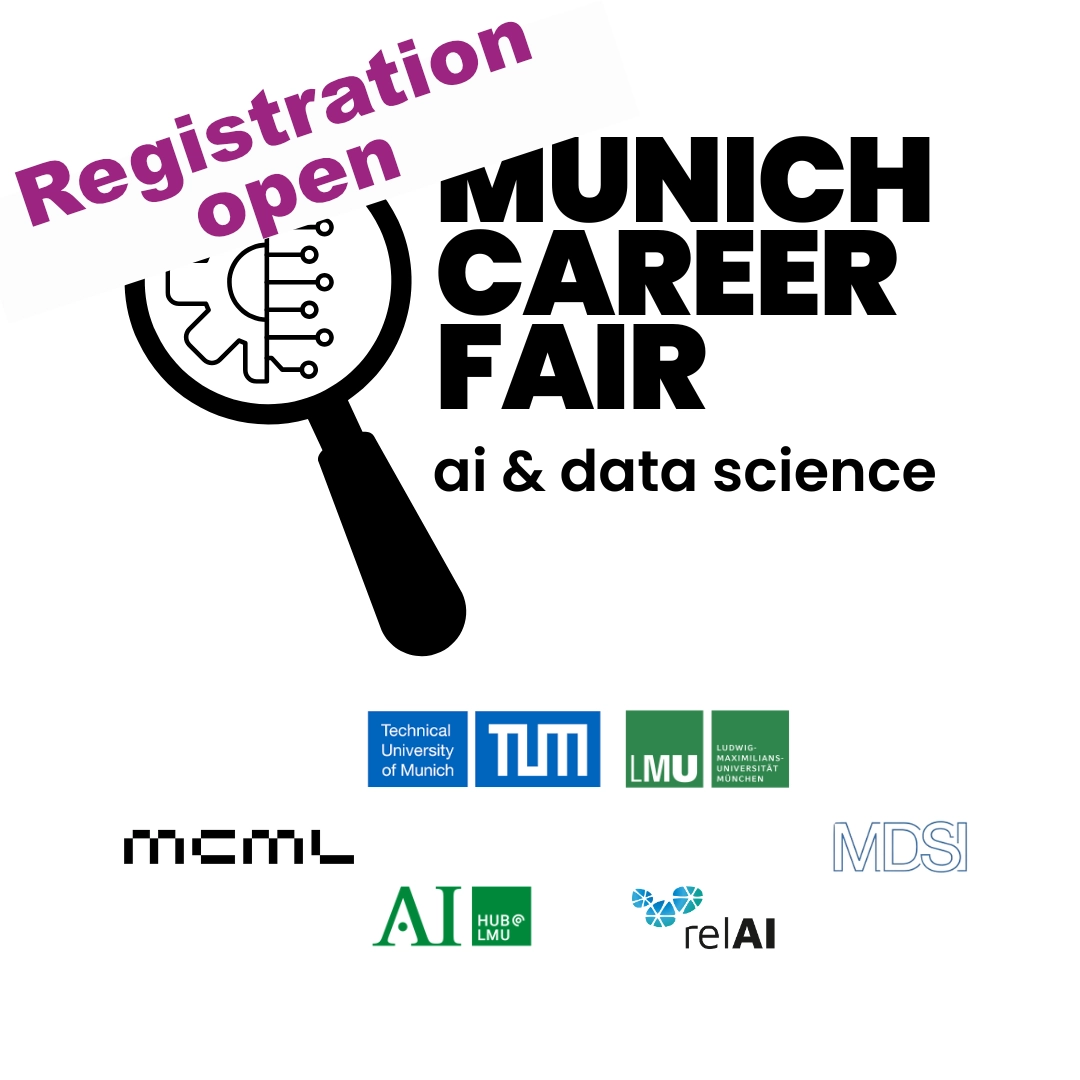
🚀Meet your future employer in AI & Data Science!
We are excited to announce the second Munich Career Fair AI & Data Science 2026 on 29 October 2026 at TranslaTUM, Munich, organized by MDSI, relAI, MCML, and AI HubLMU!
Event Details
📅Date and Time: 29 October 2026, 2 – 5 pm
📍 Location: TranslaTUM at Klinikum rechts der Isar, Einsteinstraße 25 (Bau 522), 81675 Munich
This unique career fair brings together 13 leading industry partners and students from bachelor's, master's, and doctoral programs who are passionate about Artificial Intelligence, Machine Learning, and Data Science.
Take the chance to
🔹 Learn about cutting-edge AI and data science projects 🔹 Discover internships, theses, and career opportunities 🔹 Connect with company representatives directly 🔹 Explore career paths across consulting, technology, research, and industry
/ mc
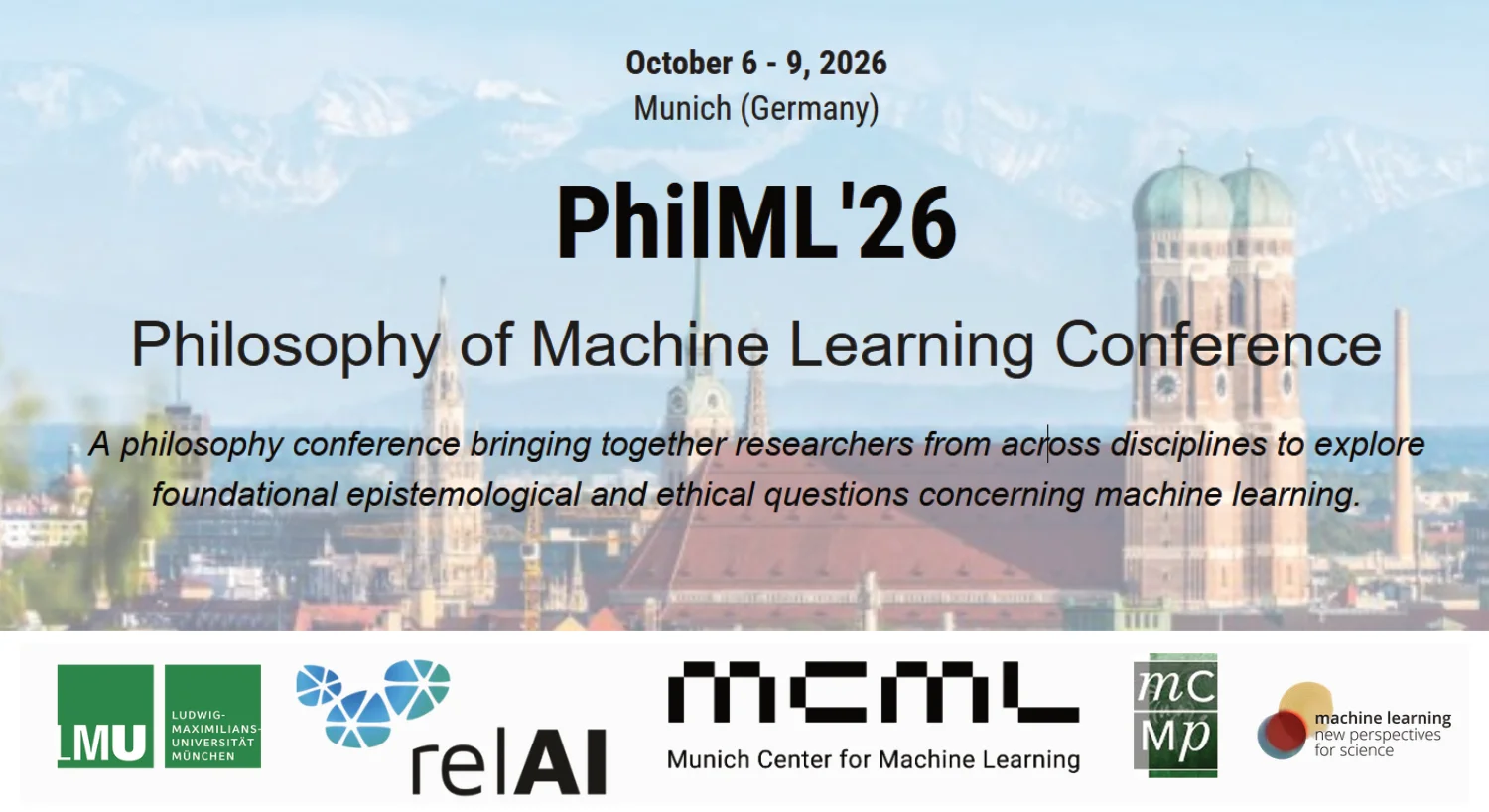
relAI is proud to support the Philosophy of Machine Learning Conference (PhilML'26), which will take place in Munich from October 6 to 9. Tom Sterkenburg, a relAI Fellow, is one of the main organizers of this event.
The conference will address fundamental epistemological, ethical, and social questions related to machine learning through the lens of analytic philosophy. We welcome the following types of work:
1. Research that applies philosophical concepts and methods to gain insights into machine learning.
2. Research that critically reflects on the philosophical and ethical implications of machine learning.
To promote close and productive dialogue, PhilML brings together philosophers and machine learning researchers with a philosophical inclination, encouraging direct engagement with scientific and mathematical details.
Join us for a lively meetup featuring leading researchers from MDSI and relAI at the SAP Labs Munich Campus Auditorium, where we will connect, discuss, and explore new ideas with our industry partner SAP.
🗓️ September 22, 2026, 4:00 - 5:30 pm (doors open at 3:30 pm, talks start at 16:00)
📍 SAP Labs Munich Campus (MUE03), Friedrich-Ludwig-Bauer-Straße 5, 85748 Garching bei München, Auditorium (AE.76)
Bhavatarini Kumaravel(MDSI): A Graph-Based Deep Q-Learning Agent for Grammar-Guided Structural Form-Finding Bhavatarini's supervisor is the MDSI Core Member Prof. Pierluigi D'Acunto, TUM Chair for Structural Design, TUM School of Engineering and Design
The work investigates how graph-based deep reinforcement learning can be combined with a structural grammar in finding novel and materially efficient structural design solutions.
Annika Schneider(relAI): Decision-aligned Evaluation of Uncertainty Quantification Annika is a relAI PhD student at Helmholtz Munich and TUM, supervised by relAI Fellow Dr. Vincent Fortuin, TUM Associate Professorship of AI for Scientific Modelling
This work investigates the question of how probabilistic models should be evaluated to ensure they perform in downstream decisions.
Sameer Ambekar(relAI & MDSI): Adressing Distribution Shifts: The Shift from Static to Thinking-based Vision-Language Models Sameer is a relAI PhD student at Helmholtz Munich and TUM, supervised by relAI Fellow and MDSI Core Member Prof. Julia Schnabel, TUM Chair for Computational Imaging and AI in Medicine
Distribution shifts have remained a persistent challenge over the years, with solutions spanning from domain adaptation to test-time training and, most recently, post-training mechanisms for vision-language models. This is because models inevitably encounter unseen data at inference time, data they were never trained for.
This talk at SAP by Sameer will focus on addressing this problem, tracing it from convolutional architectures to modern vision-language models and reasoning models, and connecting these stages through a consistent pattern: models that allocate additional computation at test time, whether through adaptation or reasoning, generalize more reliably than those relying solely on fixed, pre-trained parameters. Sketching through these topics from his PhD research, the talk will provide an overview of addressing unseen data at test time through training, reasoning, and post-training mechanisms.
/ mc
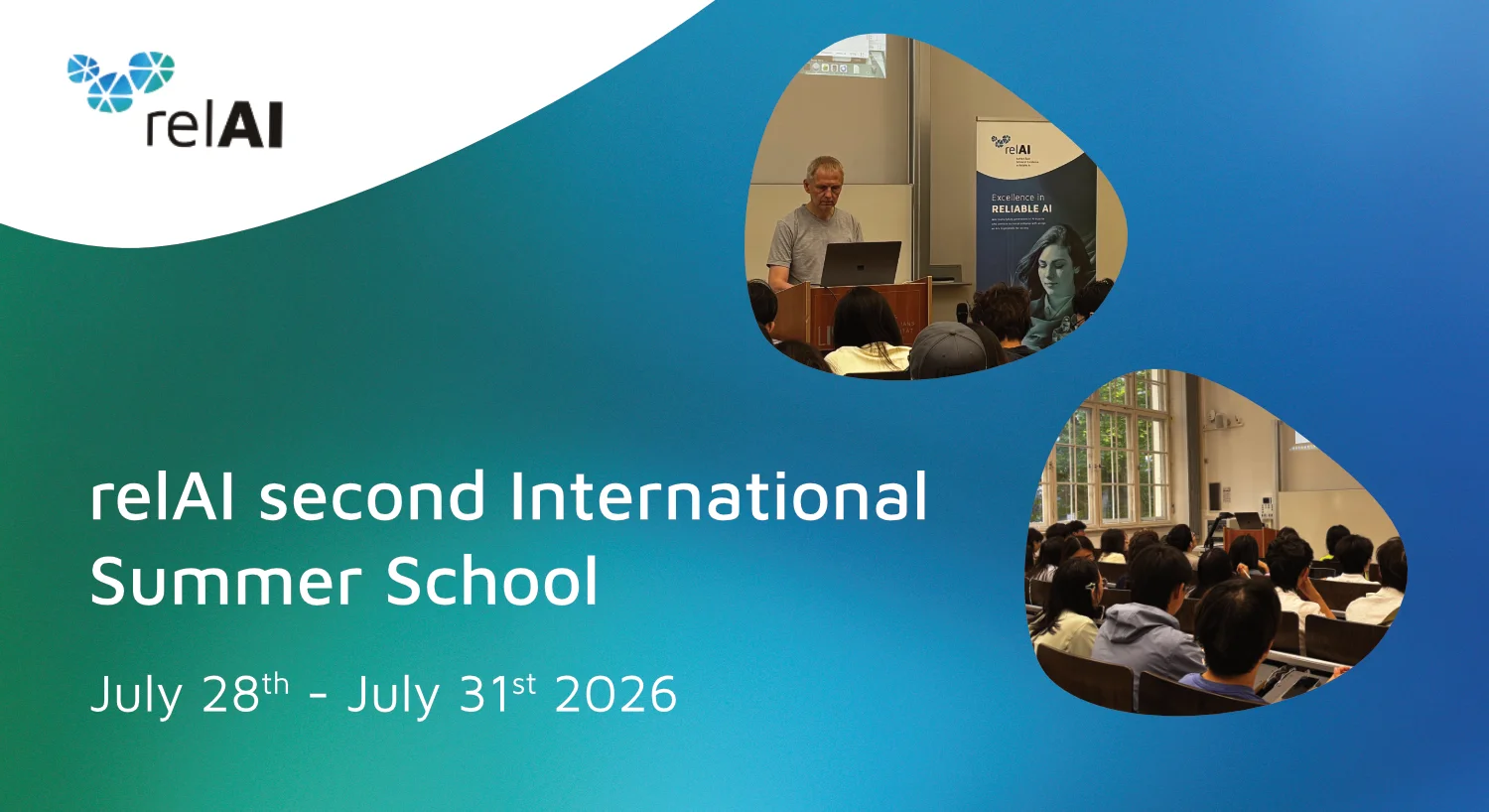
From July 28 to July 31, 2026, relAI hosted the second relAI International Summer School at LMU. This event focused on promoting educational exchange aimed at developing reliable AI and exploring current trends in the field.
Last week, our industry partner, QuantCo, hosted a networking event with relAI at their new Munich office.
The relAI students had a wonderful evening filled with engaging conversations and delicious food. They had the opportunity to meet colleagues from QuantCo's AI, and engineering teams and learned about how the company develops scalable systems to transform messy, real-world data into impactful decisions.