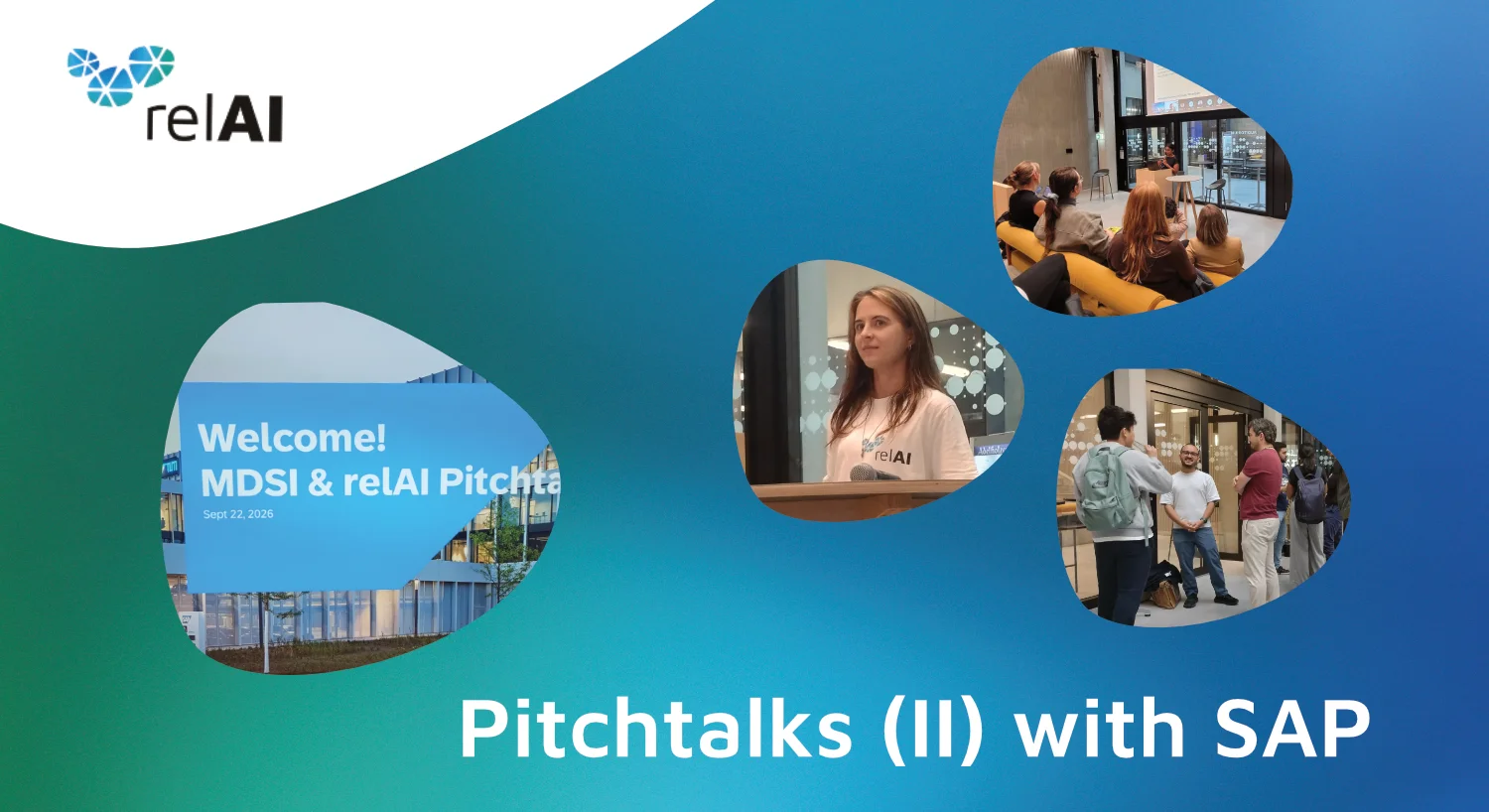
An inspiring afternoon at the second SAP Pitch Talks with MDSI and relAI
Industry Partner
/ mc
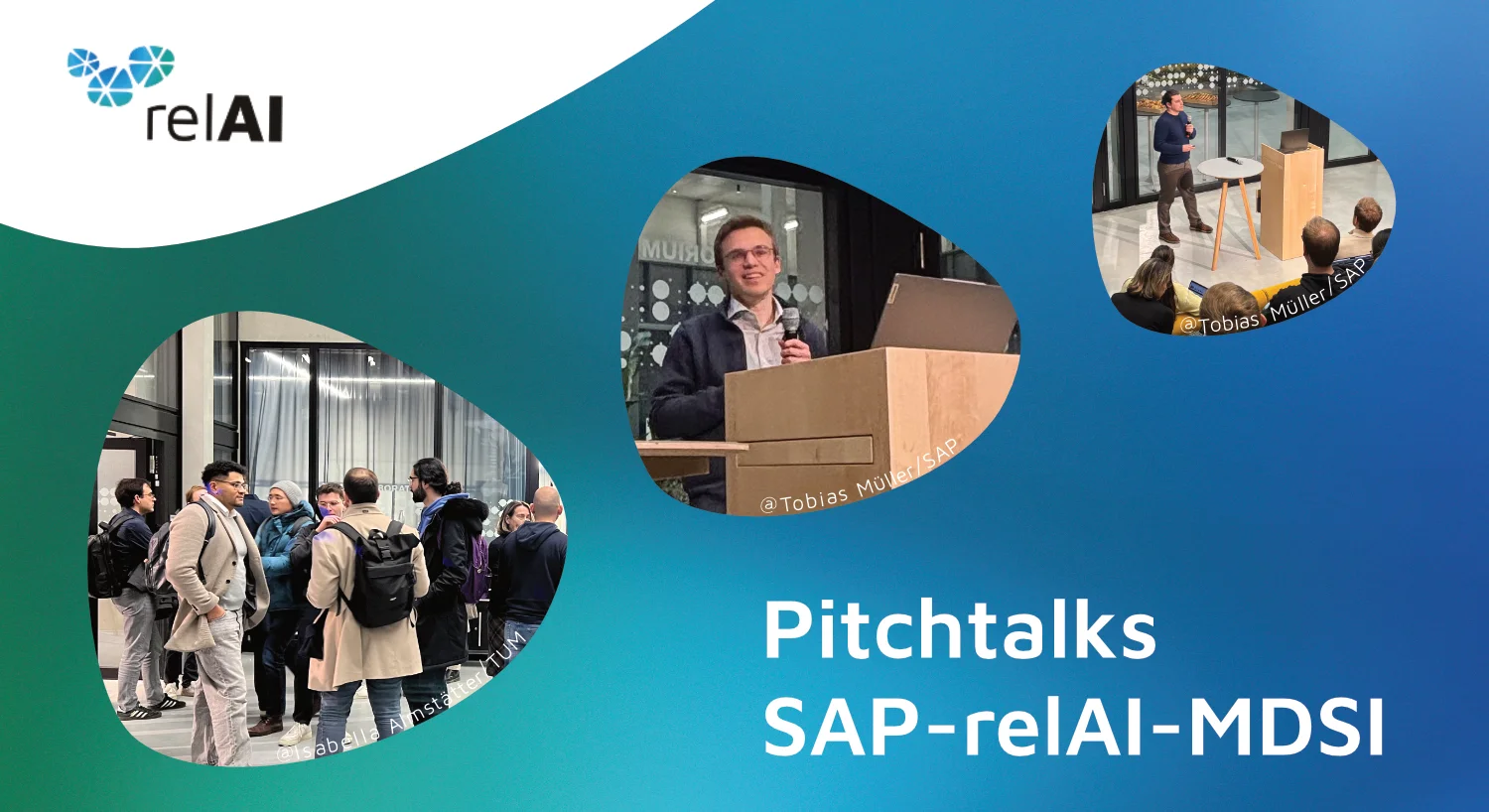
On September 22, researchers from relAI, MDSI, and our industry partner SAP came together at the SAP Labs Munich Campus in Garching for the second edition of our Pitchtalks Session.
The event, chaired by Dr. Tobias Müller (SAP), opened with welcoming remarks from Sylvia Kortüm, Managing Director of MDSI, and Dr. Anja Woracek, the new relAI Coordinator. relAI and MDSI researchers then presented their work, followed by lively discussions and networking opportunities.
🌟Highlights from the scientific presentations included:
• Bhavatarini Kumaravel(MDSI) exploring graph-based deep reinforcement learning for structural design
• Annika Schneider(relAI) presenting research on uncertainty quantification in probabilistic models
• Sameer Ambekar(relAI & MDSI): discussing distribution shifts in vision-language models
🤝 The networking session provided an excellent opportunity for researchers and industry experts to exchange ideas, discuss current and emerging challenges in AI, and explore future collaborations.
A big thank you to SAP for hosting and organizing this inspiring event. We look forward to continuing to strengthen the connection between cutting-edge AI research and industry practice in future editions.
/ mc
Join us for a lively meetup featuring leading researchers from MDSI and relAI at the SAP Labs Munich Campus Auditorium, where we will connect, discuss, and explore new ideas with our industry partner SAP.
🗓️ September 22, 2026, 4:00 - 5:30 pm (doors open at 3:30 pm, talks start at 16:00)
📍 SAP Labs Munich Campus (MUE03), Friedrich-Ludwig-Bauer-Straße 5, 85748 Garching bei München, Auditorium (AE.76)
Bhavatarini Kumaravel(MDSI): A Graph-Based Deep Q-Learning Agent for Grammar-Guided Structural Form-Finding Bhavatarini's supervisor is the MDSI Core Member Prof. Pierluigi D'Acunto, TUM Chair for Structural Design, TUM School of Engineering and Design
The work investigates how graph-based deep reinforcement learning can be combined with a structural grammar in finding novel and materially efficient structural design solutions.
Annika Schneider(relAI): Decision-aligned Evaluation of Uncertainty Quantification Annika is a relAI PhD student at Helmholtz Munich and TUM, supervised by relAI Fellow Dr. Vincent Fortuin, TUM Associate Professorship of AI for Scientific Modelling
This work investigates the question of how probabilistic models should be evaluated to ensure they perform in downstream decisions.
Sameer Ambekar(relAI & MDSI): Adressing Distribution Shifts: The Shift from Static to Thinking-based Vision-Language Models Sameer is a relAI PhD student at Helmholtz Munich and TUM, supervised by relAI Fellow and MDSI Core Member Prof. Julia Schnabel, TUM Chair for Computational Imaging and AI in Medicine
Distribution shifts have remained a persistent challenge over the years, with solutions spanning from domain adaptation to test-time training and, most recently, post-training mechanisms for vision-language models. This is because models inevitably encounter unseen data at inference time, data they were never trained for.
This talk at SAP by Sameer will focus on addressing this problem, tracing it from convolutional architectures to modern vision-language models and reasoning models, and connecting these stages through a consistent pattern: models that allocate additional computation at test time, whether through adaptation or reasoning, generalize more reliably than those relying solely on fixed, pre-trained parameters. Sketching through these topics from his PhD research, the talk will provide an overview of addressing unseen data at test time through training, reasoning, and post-training mechanisms.
/ mc
Last week, our industry partner, QuantCo, hosted a networking event with relAI at their new Munich office.
The relAI students had a wonderful evening filled with engaging conversations and delicious food. They had the opportunity to meet colleagues from QuantCo's AI, and engineering teams and learned about how the company develops scalable systems to transform messy, real-world data into impactful decisions.
We are very grateful for the invitation!
/ mc
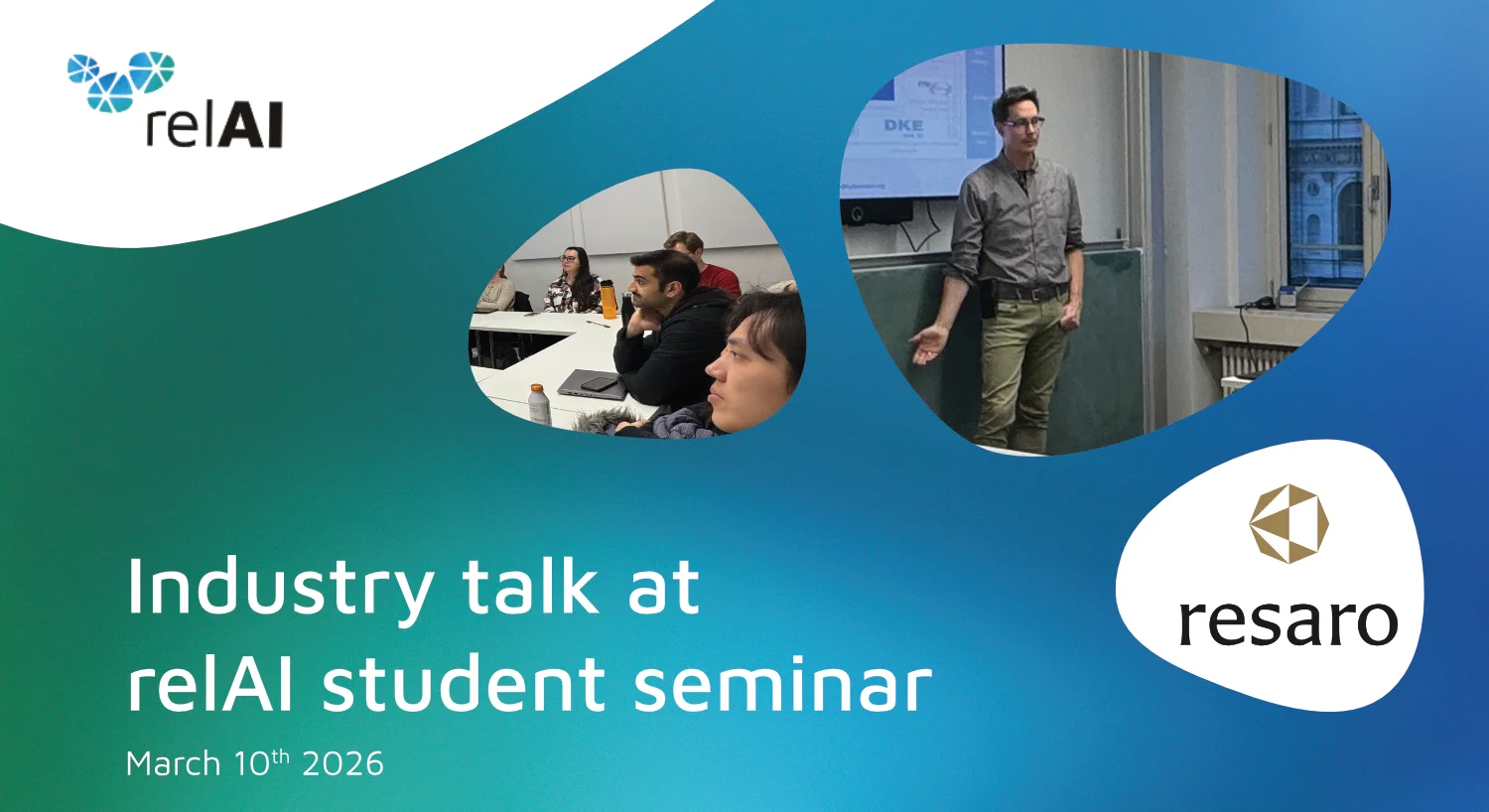
On March 10, relAI students had the privilege of hosting Dr. Sebastian Hallensleben, Chief Trust Officer at the relAI Industry PartnerResaro, as an invited speaker at the relAI student seminar. This seminar serves as an important platform that fosters valuable research exchanges and networking opportunities for our students.
Dr. Hallensleben is an expert at the intersection of AI research, regulation, and industry. He plays a significant role in developing AI standards for Europe as the Chair of CEN-CENELEC JTC 21, where European AI standards are being crafted to support EU regulations. Additionally, he co-chairs the AI risk and accountability initiatives at the Organisation for Economic Co-operation and Development (OECD).
About the Talk
In his talk, he shared valuable insights on the landscape of international AI standards and their development. The first half of the session focused on the EU AI Act, detailing how the currently developing landscape of harmonised standards will provide the technical basis for legal compliance. Moving from regulation to practice, he was joined by Linus Stach to demonstrate how Resaro interacts with this landscape in the development of their AI evaluation platform, navigating the complexity of accurately communicating technical metrics to a wide audience of stakeholders. The speakers then demonstrated their evaluation framework using a case study based on public crime statistics from Baden-Württemberg. They showed how the framework can be used to assess model performance dimensions (such as privacy, consistency and correctness), compare different models, and ensure compliant application. The seminar concluded with an extensive and detailed discussion on the practical challenges of defining and achieving AI reliability in real-world scenarios.
More about the Speaker
Sebastian is the initiator and Programme Chair of the Digital Trust Convention and is Principal Advisor Digital Trust at KI Park. As Chief Trust Officer at Resaro, he works towards drilling down to ground truths about capabilities of AI systems. - Previously, Sebastian Hallensleben headed Digitalisation and Artificial Intelligence at VDE Association for Electrical, Electronic and Information Technologies. He focuses in particular on operationalising AI ethics, on characterizing AI quality and on building privacy-preserving trust infrastructures for a more resilient digital space.
Ecologic-Computing GmbH develops software that enhances communication, storage, and computing efficiency. The company is currently focusing on beyond-Shannon communication, which explores alternative models of information processing that prioritize semantic relevance, efficiency, and robustness. Additionally, Ecologic-Computing is researching alternative computing approaches, including analog, beyond-digital, and biologically inspired computation.
Partnership with relAI
Ecologic-Computing’s research will contribute to the mathematical and algorithmic foundations relAI research area, with a focus on robustness, efficiency, and the design of responsible systems. Additionally, Ecologic-Computing will create opportunities for relAI students to collaborate and exchange ideas, giving them valuable hands-on research experience. By offering guest lectures and seminars on topics such as entrepreneurship, technology transfer, and its research and development roadmap, Ecologic-Computing will equip relAI students with insights into translating research into industry applications.
Ecologic-Computing anticipates that close interaction with relAI will benefit both researchers and students, providing access to valuable theoretical expertise.
/ mc
On January 20, 2026, researchers from relAI, MDSI and our industry partner SAP gathered for a pitchtalk session at the SAP Labs Munich Campus in Garching. In an interactive setup, participants from the three organizations exchanged research insights and explored ideas for future collaborations.
The afternoon opened with short welcome words from representatives of SAP (Dr. Tobias Müller), MDSI (Sylvia Kortüm) and relAI (Dr. Mónica Campillos). The following pitchtalks covered a wide range of topics relevant to AI and Data Science, spanning methodological approaches to practical research resources.
Pitchtalk Session
The talks introduced methodologies and applications across various research fields, from uncertainty modeling to personalized medicine and research data infrastructure.
Max Beier, a relAI PhD student, discussed the advantage of using linear-operator methods in dynamical systems. By focusing on linear operators, his approach supports optimal control, scalable optimization algorithms, and reliable forecasting across time scales ranging from milliseconds to days. He showed that this methodology allows efficient learning of system behavior, modeling of trajectory distributions, and generation of coherent sequences, addressing current limitations in decision‑making models for complex dynamical environments.
Parastoo Pashmchi, an industrial PhD student at SAP, introduced an efficient algorithm to handle missing data, a common challenge in AI projects. She presented an ML‑based imputation method that preserves the original data distribution by sampling from the conditional distribution of nearest neighbors, overcoming the limitations of common techniques like kNNImputer. By enabling uncertainty quantification and multiple imputations, her approach improves the reliability of predictive models such as SAP’s green energy forecasting use case, where missing solar production data can significantly undermine model accuracy.
Mario Picciani, an MDSI PhD student, highlighted recent developments and applications of ProteomicsDB, a proteomics resource established in 2012 through a collaboration between MDSI Core Member Prof. Bernhard Küster and SAP. ProteomicsDB is a powerful multi‑omics, multi‑organism platform that enables real‑time exploration of proteomic, transcriptomic, and drug‑interaction data across the tree of life, supporting research from basic biology to large‑scale initiatives. With expanding capabilities for analyzing drug mechanisms, predicting cell responses, and supporting precision oncology, the SAP HANA–powered resource could become a central tool for biomarker discovery, systems biology, and personalized medicine.
Sebastian Gallenmüller, an MDSI PhD student, presented SLICES-DE, a digital research infrastructure for computing and communication, embedded within a European collaborative network. As a national digital research infrastructure for ICT, SLICES‑DE offers remote‑accessible testbeds, reproducible workflows, and long‑term data management to support research in areas such as 6G, AI, cybersecurity, and cloud‑edge systems. Built as a community‑driven, flexible, and scalable platform, it enables shared experiments, training, and industry collaboration, providing both academia and companies with a versatile environment that can even be booked for individual lectures or large‑scale projects.
Networking over pretzels and lemonade
An informal networking session after the pitchtalks gave speakers and participants from relAI, MDSI, and SAP the opportunity to connect, exchange impressions, discuss research interests, and explore potential collaborations.
We thank our industry partner SAP for hosting this event and sharing insights into ongoing research projects – we look forward to future editions!
We are happy to announce that Resaro has joined relAI as an Industry Partner!
Resaro stands for REsponsible - SAfe - RObust. Its mission is to ensure the performance, safety, and security of mission-critical AI systems, which is fundamentally aligned with the four relAI central themes: responsibility, privacy, safety and security.
Resaro’s Approved Intelligence Platform (AIP) provides modular, scenario-based testing workflows to evaluate mission-critical AI systems in defence, public safety, and critical civil use cases. It delivers a comprehensive, end-to-end testing environment based on a proprietary AI trust ontology with measurable AI Solutions Quality Indicators (ASQI) to test, evaluate, verify and validate on solution or system level with different AI modalities. This evaluation covers various aspects, including quality, performance, safety and security. Recent systems under examination have included anti-money laundering solutions, X-ray imaging anomaly classifiers, deepfake detectors, UAVs, face-in-crowd recognition systems, hypothesis generators for pharmaceutical research, customer service chatbots, and video action recognition solutions, among others.
Additionally, Resaro has developed an innovative approach not only to test for quality but also to describe it in a use-case-specific yet standardized manner. For more information, visit www.resaro.ai/asqi.
Partnership with relAI:
🤝Through this mutually beneficial partnership, relAI Students will gain access to internship and research opportunities, while relAI will expand its network by adding unique skills. Additionally, Resaro will strengthen and broaden its open-source trust community, exchanging knowledge with both academic institutions and industry partners.
/ mc
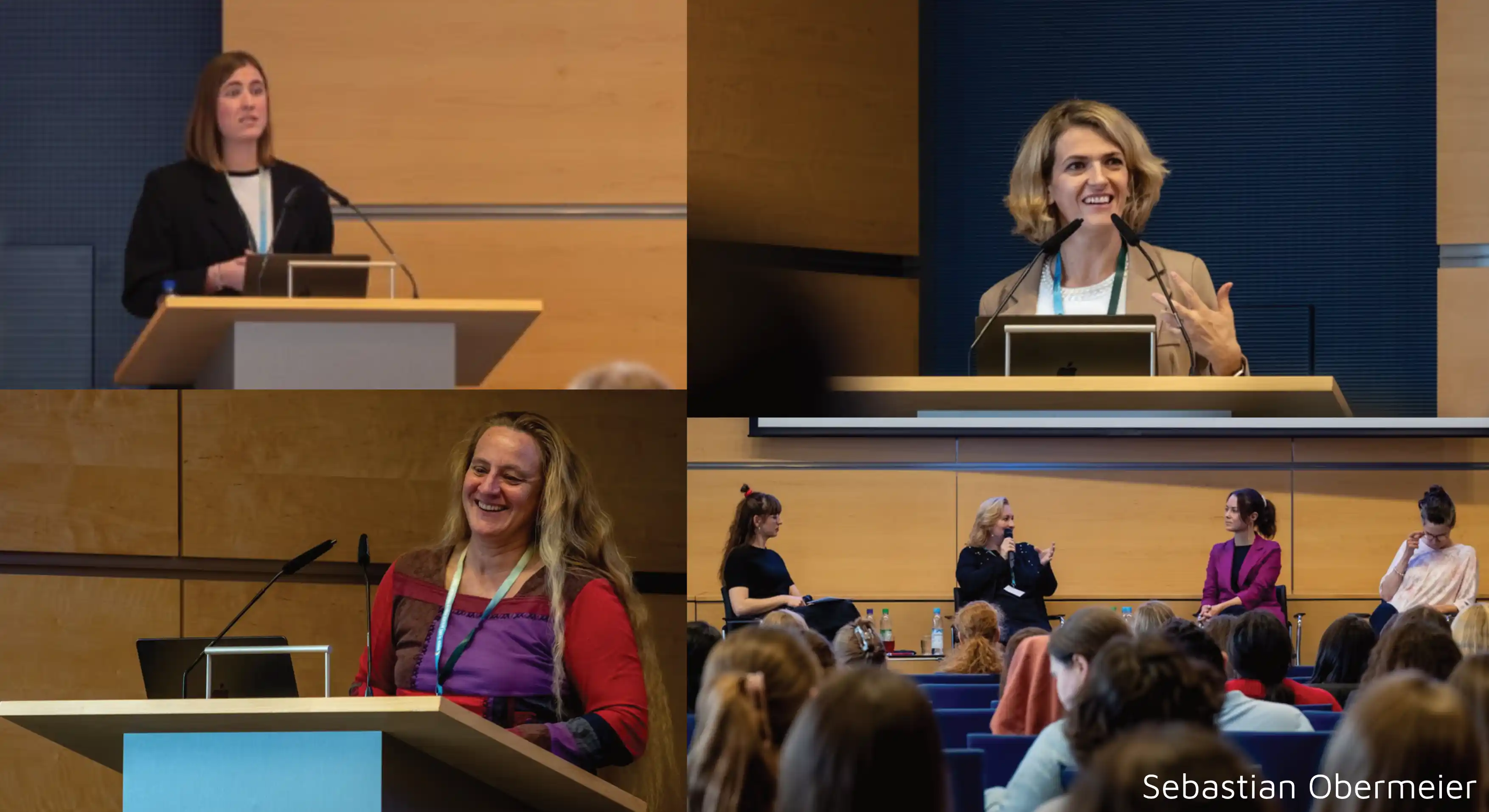
On Tuesday, October 21, 2025, the Women in Data Science (WiDS) Munich Conference gathered a vibrant community of researchers, professionals, and students for a day filled with engaging talks, insightful panels, and meaningful networking opportunities. Hosted by Bayerischer Rundfunk (BR), the event celebrated the power of data science to drive social change and empower women in technology.
In line with relAI's commitment to promoting gender equality and diversity, its members supported the event in various ways. The conference was moderated by relAI PhD student Lisa Schmierer, and the keynote address was delivered by relAI Fellow Enkelejda Kasneci, who spoke about using AI to support socially disadvantaged children. Additionally, relAI PhD student Lisa Wimmer presented a talk on "The Need for Uncertainty in Machine Learning." Frauke Kreuter, relAI Fellow and Ombudsperson as well as member of the Steering Committee, participated as a panelist in the discussion titled “When Evidence Meets Opposition: Navigating the New Normal.” Finally, relAI Coordinator Andrea Schafferhans shared insights on how to earn a PhD in an academic environment during the networking session.
👉 Visit these links for more information on the event, including the agenda and photos.
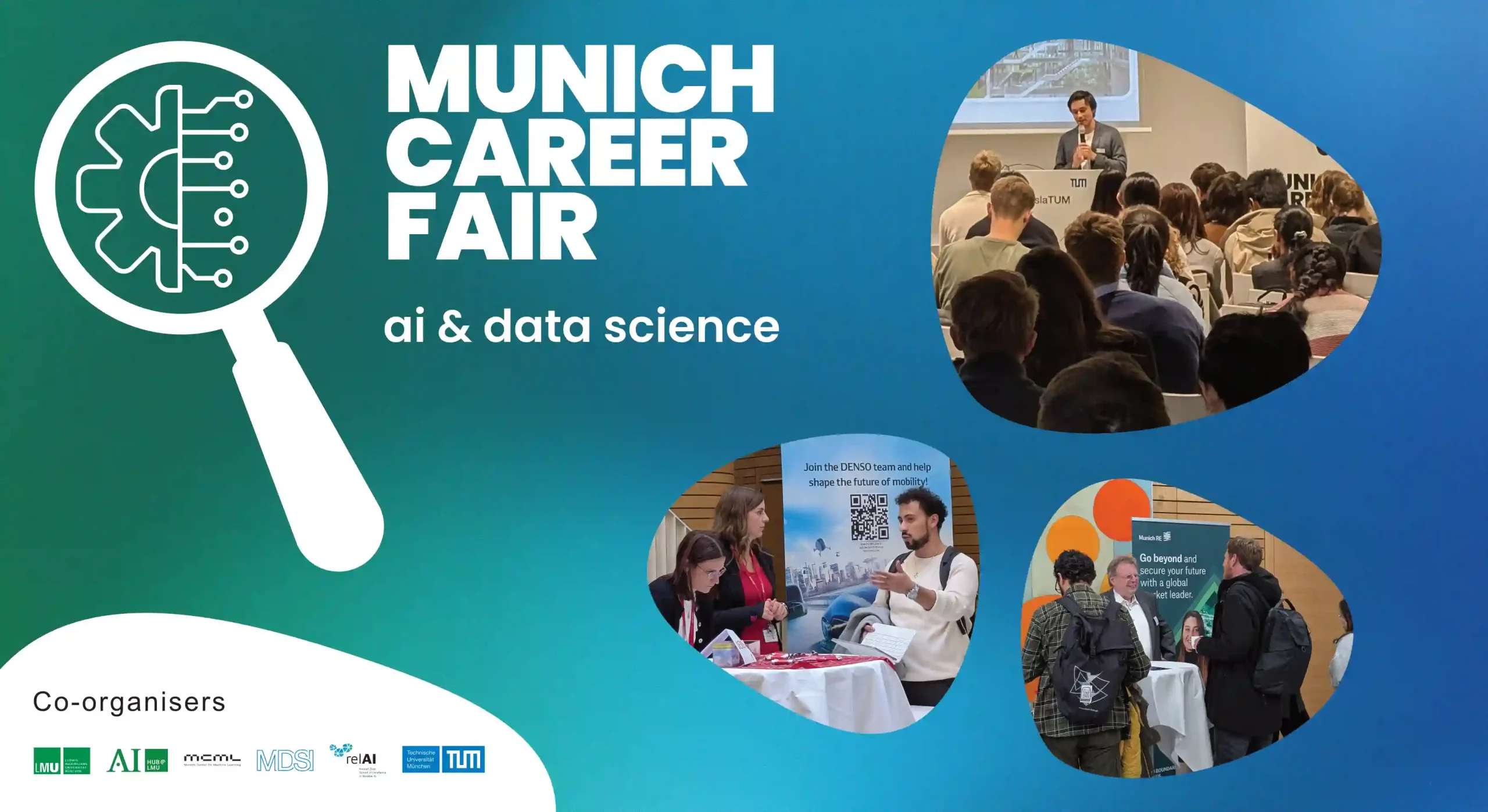
On October 23, 2025, relAI, the Munich Data Science Institute (MDSI), the Munich Center for Machine Learning (MCML), and the AI Hub@LMU organized the Munich Career Fair AI & Data Science 2025 at TranslaTUM.
The event brought together eleven industry partners and over 150 students across various educational stages, from bachelor’s to doctoral levels. Each partner presented an overview about their activities in AI and data science, highlighting associated career opportunities. Additionally, students had ample time and space for networking and personal interactions at the industry stands in the foyer of TranslaTUM.
We extend our heartfelt thanks to all participants, especially the industry partners, for showcasing potential career paths in AI and Data Science and contributing to the success of the fair. We look forward to seeing all of you at the next edition.
/ mc
relAI is excited to announce that GE HealthCare has become an official industry partner.
As one of the leading global providers of MRI, ultrasound, and other medical imaging technologies, GE HealthCare is dedicated to creating a world where medicine and healthcare have no limits. Their mission aligns closely with relAI’s focus on safety and security, aiming to provide high-quality, reliable devices to improve patient care. GE HealthCare is furthermore connected to relAI through PhD students Natascha Niessen and Ha Young Kim, who are both PhD scientists at GE HealthCare.
GE HealthCare is eager to connect with young talents at relAI and support them in their career development and educational journeys. To facilitate this connection, GE HealthCare will host an event, offering relAI students the opportunity to learn more about the work being done at the R&D site in Munich. This event will also allow students to explore potential collaborations and meet professionals who are shaping the future of medical technology.