We are pleased to share relAI’s contribution to the European Embodied Robotics Week, whichtook place last week in Munich. The event was organizedby RoboTUM together with START Munich and the ESRA (European Student Robotics Association) network.
The Robotics Festival convened a diverse range of stakeholders from the European robotics and physical artificial intelligence ecosystem. Specialists, students, and robotics enthusiasts participated in city-wide events, including open houses at robotics laboratories, makerspaces, and studios throughout Munich, as well as a hackathon.
The event ended with a summit featuring talks and panels from leaders in embodied intelligence. relAI was represented in the panel discussion “Dexterity and Manipulation for robotics” by relAI Fellow Prof. Khadiv.
/ mc
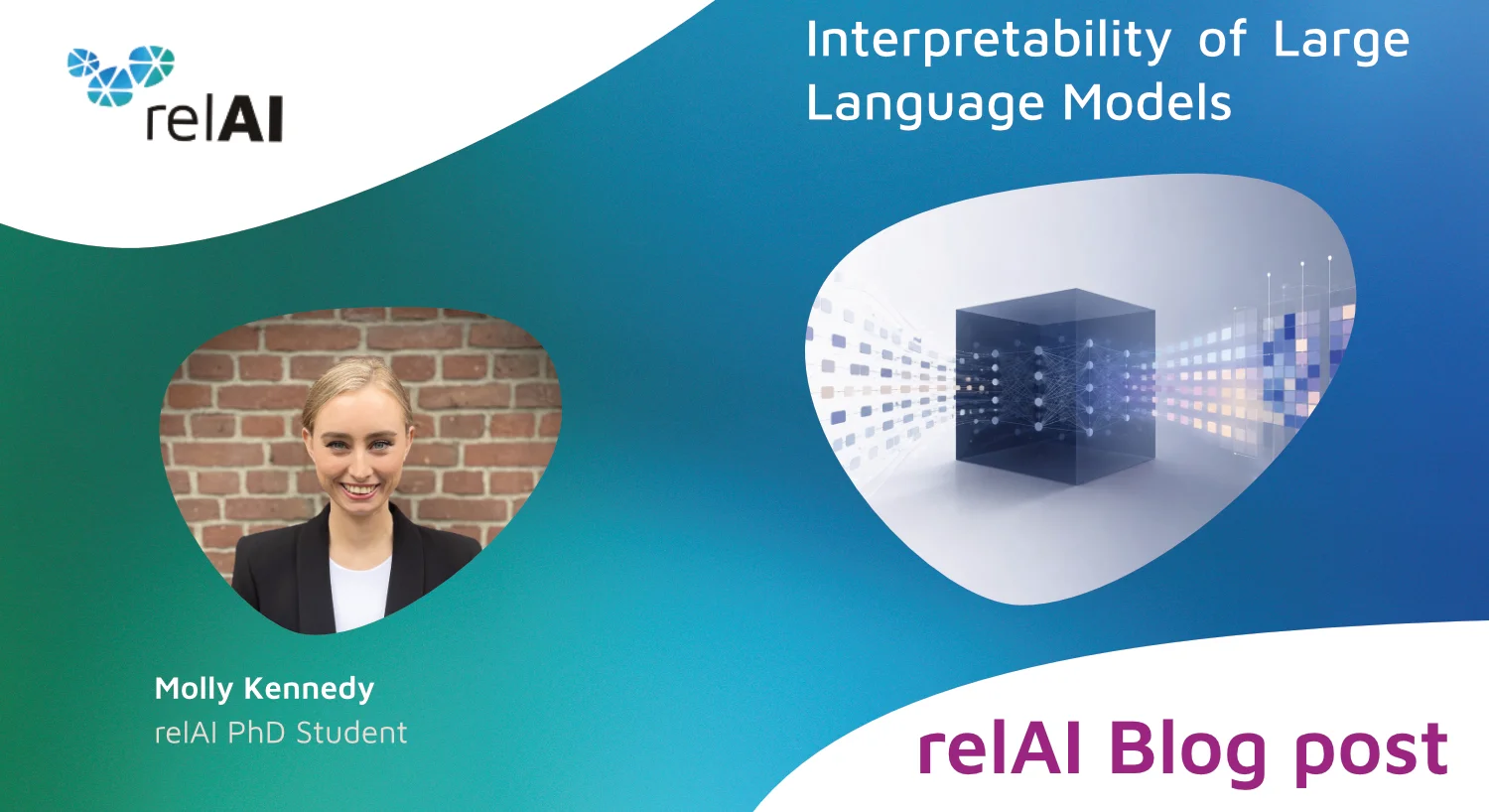
Machine learning (ML) - based techniques enable robots to perform a range of tasks in complex environments. Research in this area has increased significantly in recent years, with various ML methods being explored to allow robots to make decisions based on task requirements and changes in their surroundings. However, some of the tested approaches, such as reinforcement and imitation learning, often struggle with training stability and capturing the multimodal nature of behavior. In this blog post, Tzu-Yuan Huang introduces a promising ML approach for robotic decision-making: diffusion models.
relAI is proud to announce an outstanding achievement – a first author publication of Moritz Knolle, one of relAI’s PhD students, in Nature journal.
Medical AI models are increasingly utilized in applications such as diagnosing and remotely treating patients. While these models have proven valuable to both practitioners and patients, concerns remain about the privacy of patients whose information is used to train these AI systems. This issue has been examined by relAI PhD student Moritz Knolle, in a study published this week in Nature. The analysis revealed privacy vulnerabilities in medical AI models, emphasizing the importance of reliable AI research in medicine and healthcare 🩺.
🔍 Check the summary below and the article to learn more about the study!.
Summary of the article
Individuals whose data are used to train medical AI models may be at risk of being identified in cyber-attacks, according to a Nature paper published this week. Underrepresented groups may face disproportionately higher risks of having their data compromised, the study indicates. The researchers find these individuals are not accounted for in current risk assessments and call for further mitigation and strict access control.
Medical AI models may improve global health outcomes, especially in areas in which specialized expertise is not available. Yet, the sensitive data used to train these models may be exposed to privacy attacks. Membership inference attacks (MIAs) are used by attackers to determine whether an individual’s data were used to train a model. From these attacks, a patient’s medical data and private information can be determined. Previous research on data risk has been determined by whole datasets, and does not take an individual’s risk into account.
Moritz Knolle and colleagues conduct a privacy audit to focus on individual privacy risk, finding that medical AI models may pose a privacy risk to individual data contributors. Using seven large datasets made up of real-world clinical data, including medical images, electrocardiograms and electronic health records, the authors determine the most vulnerable among data-contributing patients. They find that at an individual level, those targeted by the MIAs were successfully done so with almost no error. At a group level, those identified as underrepresented in datasets include people with rare diseases, people from a minority racial group or, socioeconomic status, or those having the less-common gender. With more distinctive data that are encoded by AI models, these groups and individuals are found to be more vulnerable and disproportionately exposed to privacy attacks. The authors find the instances of successful MIAs attacks rise with model capacity and size.
These findings show privacy attacks, such as MIA, are more effective at successfully targeting on an individual level than currently thought. The authors conclude that privacy risk assessment must now take individual risk into account, and vulnerable models be further protected."
The Berlin-Brandenburg Academy of Sciences and Humanities has a remarkable 325-year history of bringing together brilliant scholars and scientists from various backgrounds and disciplines, including 82 Nobel Prize winners. This Academy plays a vital role in our society by not only advancing research in the humanities but also addressing critical scientific and social issues through collaboration. We deeply value its mission to foster understanding and dialogue between the scientific community and the broader society, as this connection is essential for tackling the challenges we face together.
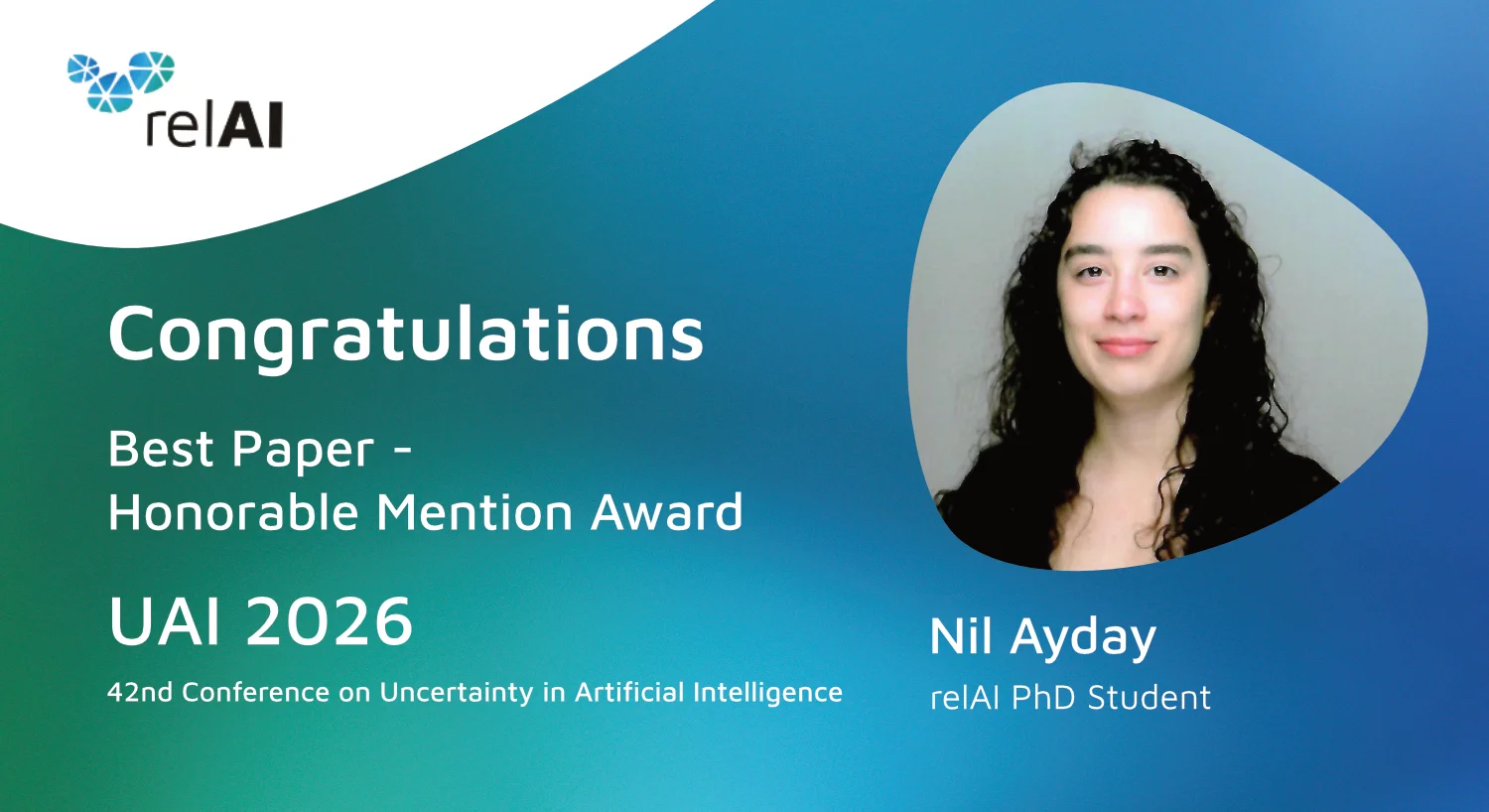
🎉 Congratulations!
/ mc
Last week, the relAI family gathered for our annual retreat in the beautiful and serene Bad Kohlgrub, from June 17th to 19th. During this time, relAI students, fellows, directors, and management came together to share ideas and visions for the future of our school, the role of AI in education, and the future of science in the era of agentic AI.
The program included keynote talks from relAI fellows Enkelejda Kasneci, Sandra Hirche, Niki Kilbertus, and Christoph Kern. It also featured lightning talks by relAI students, group discussions, and fellow/student one-on-one sessions. Additionally, there was plenty of time for networking and social activities.
Keynote by Enkelejda KasneciKeynote by Sandra HircheKeynote by Niki KilbertusKeynote by Christoph Kern
In the one-on-one sessions, relAI fellows and students connected directly to discuss their research experiences, career paths, and future aspirations. These conversations provided a unique mentorship opportunity, often sparking new perspectives for both mentors and mentees.
This year's group discussions focused on questions about the two strategic pillars that are currently reshaping the landscape of reliable AI:
Future of Science in Times of Agentic AI
How do agentic workflows change the way we conduct and validate our research?
What are the theoretical and practical requirements for genuinely dependable autonomous systems?
AI for Next Generation Education
What roles will AI and human teachers play moving forward? How can we lead the adoption and ethical use of AI technologies?
How can we establish standards for reliability in pedagogical AI tools?
A highlight of this year’s retreat was the presentation of the final relAI certificates to MSc and PhD students who completed the program. This moment provided an opportunity to reconnect with relAI alumni and learn about their career paths after leaving relAI.
This inspiring retreat strengthened our community and paved the way for our efforts to shape the future of reliable AI.
A big thank you to everyone who participated and contributed to making this event a success!
/ mc
On June 8, 2026, TUM hosted the International Symposium 'Future Learning: Global Perspectives, European Pathways' as part of the new relAI research area Learning & Instruction.
Frontier AI systems have recently solved IMO problems, discovered new mathematical constructions, and resolved open Erdős problems. Yet a more mundane question remains: 🤔how should a working mathematician actually use these tools day to day?
In this talk, titled “The Agentic Researcher: Turning AI Coding Agents into Research Assistants” Emil Partow, PhD Student of our relAI Director Prof. Gitta Kutyniok presented a recent paper from Prof. Pokutta (Zuse-Institut Berlin) that offers a concrete answer. The authors propose a five-level taxonomy of AI integration into research, ranging from classical work without AI to fully autonomous research loops. They have implemented this idea within an open-source framework.
Following a detailed presentation by Emil Partow, members of relAI and Prof. Kutyniok's research group gathered to discuss this forward-looking topic. The presentation explained the open-source tool that implements core research "commandments" (such as preventing the falsification of experimental data) via a practical, actionable loop. Participants then discussed how AI agents are already shaping research methodologies, what is required to implement these workflows successfully, and how to ensure human oversight remains at the center of the process. Emil also shared a practical case study demonstrating the tool in action, sparking a broader reflection on the evolving role of AI in modern research.
/ mc
Machine learning models, such as ChatGPT and those used in autonomous driving, are becoming essential tools in our daily lives. However, the existence of Adversarial Examples demonstrates that these systems are not free from vulnerabilities. To ensure their reliability, it is crucial to proactively address the potential risks associated with their use in critical safety applications.
In a recent blog post, relAI PhD student Lukas Gosch introduces the concept of Adversarial Examples and discusses Certifiable Robustness, a methodology designed to combat 🛡️ them.
What is an Adversarial Example?
As Lukas Gosch outlines, Adversarial Examples are deliberately crafted inputs that cause machine learning models to misclassify data. For example, the strategic placement of stickers on traffic signs can lead to incorrect identification of road signs by machine learning systems used in autonomous vehicles. Additionally, if an adversary manipulates the training data upon which these models are built, this too qualifies as an Adversarial Example.
How to combat Adversarial Examples?
In his post, Lukas describes Certifiable Robustness, a methodology for verifying the resilience of machine learning systems against adversarial examples, and explores the challenges associated with it.
🎤 Michael Lachner, CEO of Aqarios and one of the first relAI alumni, is developing solutions that combine quantum computing, AI, and advanced optimization algorithms to solve complex challenges in industry and business. In his interview with DAAD, he talks about his vision for the future of quantum computing in industry and Germany’s role as a leader in this transformation.
The interview in a 📸 snapshot:
🔹 Companies should start preparing today to leverage quantum computing and avoid missing the next major technological leap.
🔹 Germany has strong potential to play a leading role in the global AI and quantum landscape – driven by top-tier research, growing investment, and innovative start-ups.
🔹 Lachner values the academic excellence and networking opportunities provided by relAI and Zuse Schools across Germany.
As our current Coordinator is taking an exciting 👏 next step in their academic career to transition into a professorship 🎓, a wonderful opportunity has opened to join our team.
If you are interested in working at our innovative and interdisciplinary school, where you can help shape the research and education of the next generation of experts in reliable AI, we encourage you to check out the job posting.
If you meet the qualifications and would like to apply, please submit your application by June 14, 2026.
Coordinator of the Konrad Zuse School of Excellence in Reliable Artificial Intelligence (m/f/d)
The Konrad Zuse School of Excellence in Reliable Artificial Intelligence (relAI), founded in 2022, is one of three DAAD funded AI schools in Germany. relAI is a joint endeavor of TUM and LMU and has quickly become an international lighthouse for education and research in reliable AI in Germany. More than 100 MSc and doctoral researchers participate simultaneously, supervised by more than 50 professors. Our network includes international AI centers, non-university research organizations and various industrial partners. relAI opens up career paths in academia and industry to talented young researchers from around the world. The coordination office of this graduate school is located at and embedded in the infrastructure of the Munich Data Science Institute (MDSI) – an Integrative Research Institute at the Technical University of Munich (TUM) with an interdisciplinary and cross-faculty focus in the field of data science, machine learning and A
As the Coordinator of relAI you will be responsible for managing school-wide and extra-school activities.
Key responsibilities:
Developing and organizing events and training courses, e. g. career fairs, seminars, symposia, workshops, seasonal schools, retreats and conferences
Reporting to the directors, the DAAD and various stakeholders
Serving as the primary point of contact for our fellows and for our academic and industrial partners
Developing and executing recruitment strategies for the school´s candidates
Overall responsibility for the school's budget monitoring and financial reporting in coordination with TUM’s central administration; overseeing the allocation of funds and maintaining the comprehensive records and databases of the relAI network
Implementation and maintenance of efficient project management structures to ensure smooth daily operations of the graduate program.
Coordination of the application for project continuation after 2027.
Your qualification:
We are looking for a reliable and collaborative person able to manage a broad range of tasks and responsibilities with
Postgraduate degree (MSc or equivalent), combined with a certain affinity for data science, machine learning and AI
Professional experience in project management and/or science management, ideally in coordinating university programs or graduate schools
Leadership skills and a good intercultural understanding, high motivation, flexibility and reliability
Fluent in German and English, written and spoken, negotiating skills
Beyond standard MS Office, experience in managing digital collaboration tools and technical infrastructures is highly desirable (e.g., mailing lists, basic SQL databases, or content management systems for website maintenance).
We offer:
Full responsibility from the start in an innovative environment and with real impact on the data science ecosystem at TUM and in Munich
International, attractive, and interdisciplinary working environment across different departments and disciplines
Salary according to TV-L (depending on qualification up to E13) including social benefits.
Application:
The position can start immediately, and the contract duration is initially limited until December 31, 2027; a further extension is envisioned, subject to continued project funding. As an equal opportunity and affirmative action employer, TUM explicitly encourages nominations of and applications from women as well as from all others who would bring additional diversity dimensions to the university’s research and teaching strategies. Preference will be given to disabled candidates with essentially the same qualifications. If you are interested, please apply until June 14, 2026 with a cover letter (stating also your earliest date of entry), CV and relevant certificates plus reference letters via email to application@mdsi.tum.de (please attach a single PDF file and use the subject Coordinator relAI).
As part of your application for a position at the Technical University of Munich (TUM), you are transmitting personal data. Please note our data protection information in accordance to Art.13 General Data Protection Regulation (GDPR) for the collection and processing of personal data in the context of your application (https://portal.mytum.de/kompass/datenschutz/Bewerbung/). By submitting your application, you confirm that you have taken note of TUM´s data protection information.
Contact: https://zuseschoolrelai.de/ Email: coordinators@zuseschoolrelai.de Technische Universität München Munich Data Science Institute Konrad Zuse School of Excellence in Reliable AI Walther-von-Dyck-Straße 10 85748 Garching bei München