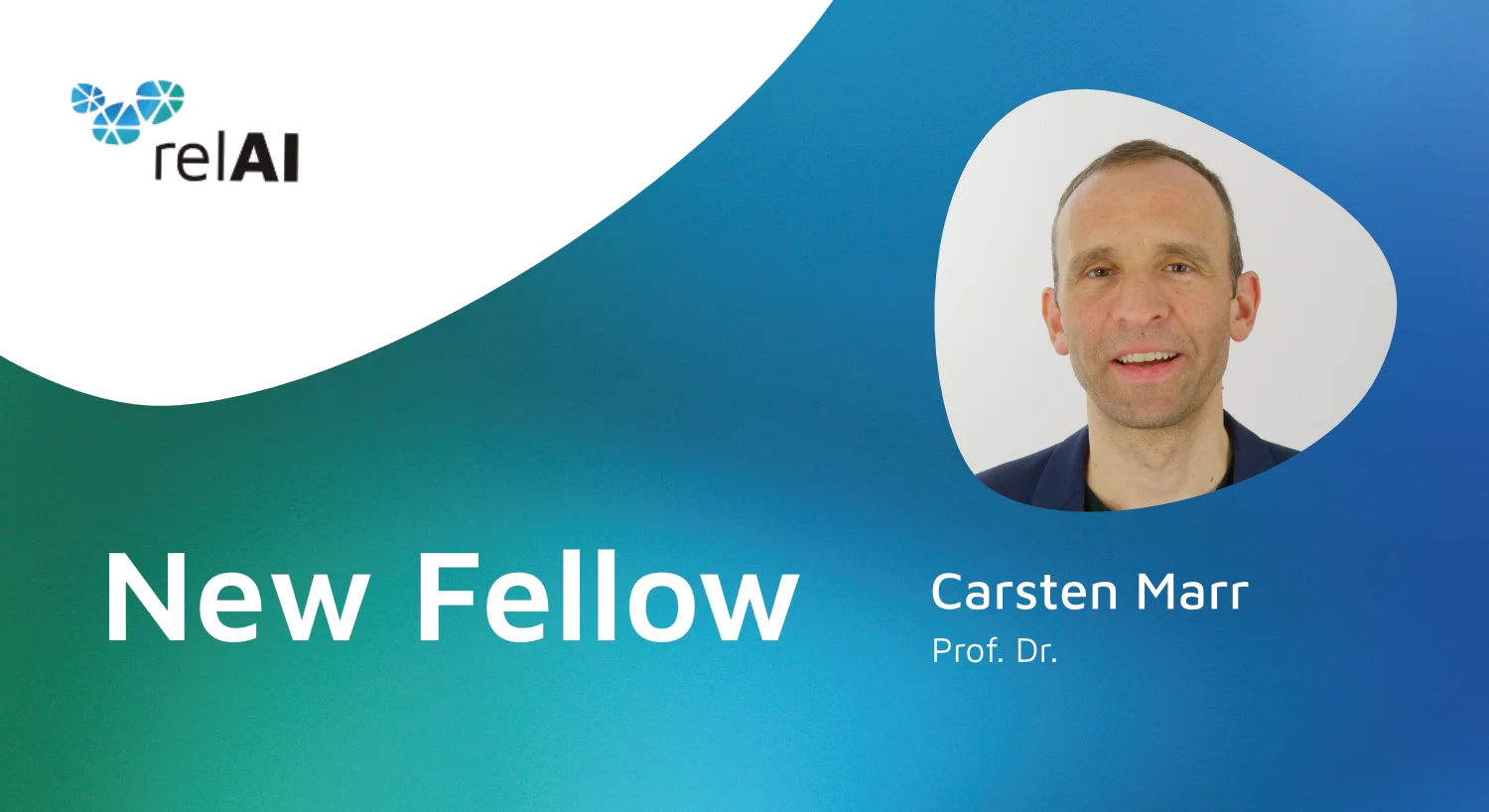
relAI welcomes relAI Fellow Carsten Marr

Welcome on board 🛳️ !

relAI Fellow Carsten Marr is Professor for AI in Cell Therapy and Hematology at the Medical Faculty and Clinics of the Ludwig-Maximilians-Universität München, as well as Director of the Institute of AI for Health at Helmholtz Munich.

In recent years, he has made significant contributions to AI-based hematological cytology. His focus on the interpretability of models trained on patient data to make predictions in a biomedical context 🩺 closely aligns with relAI's central themes of safety and responsibility. His innovative multiple instance learning models facilitate the investigation of relevant cells for disease prediction, while sparse autoencoders help correlate image features with diagnostic concepts. Additionally, his work on linking images and language enables direct comparisons between understandable human terms and cellular patterns within gigabyte-sized digital scans. At relAI, he will support students through lectures, mentoring, and participation in events.

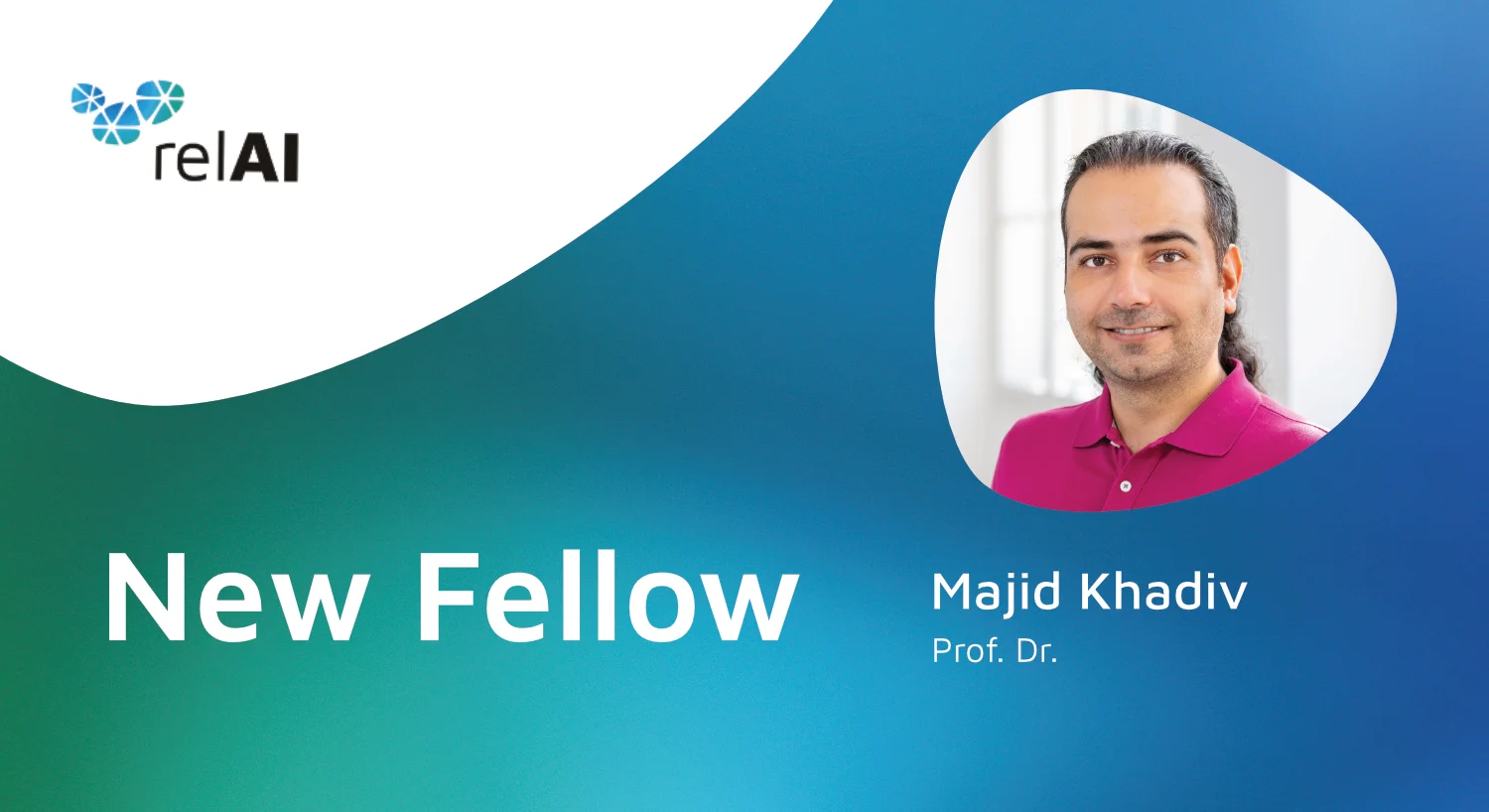
We are thrilled to welcome Majid Khadiv as a Fellow at relAI!✨ He is an Assistant Professor at the School of Computation, Information and Technology (CIT) of the Technical University of Munich (TUM), where he holds the Chair of AI Planning in Dynamic Environments, and is Principal Investigator at the Munich Institute of Robotics and Machine Intelligence (MIRMI).

His lab focuses on the fundamental question of how to develop a scalable approach to building intelligent humanoid robots while also providing formal safety guarantees for reliable deployment in our daily lives. This research direction aligns with relAI's goal of creating safe and secure AI made in Germany. Moreover, his work on ethics in robotics 🤖 complements relAI's mission by emphasizing the importance of ethical considerations in the development of reliable AI.

As a fellow, he will contribute to the relAI curriculum by delivering lectures to students and helping them gain practical experience through internships.

A warm welcome! 🤝

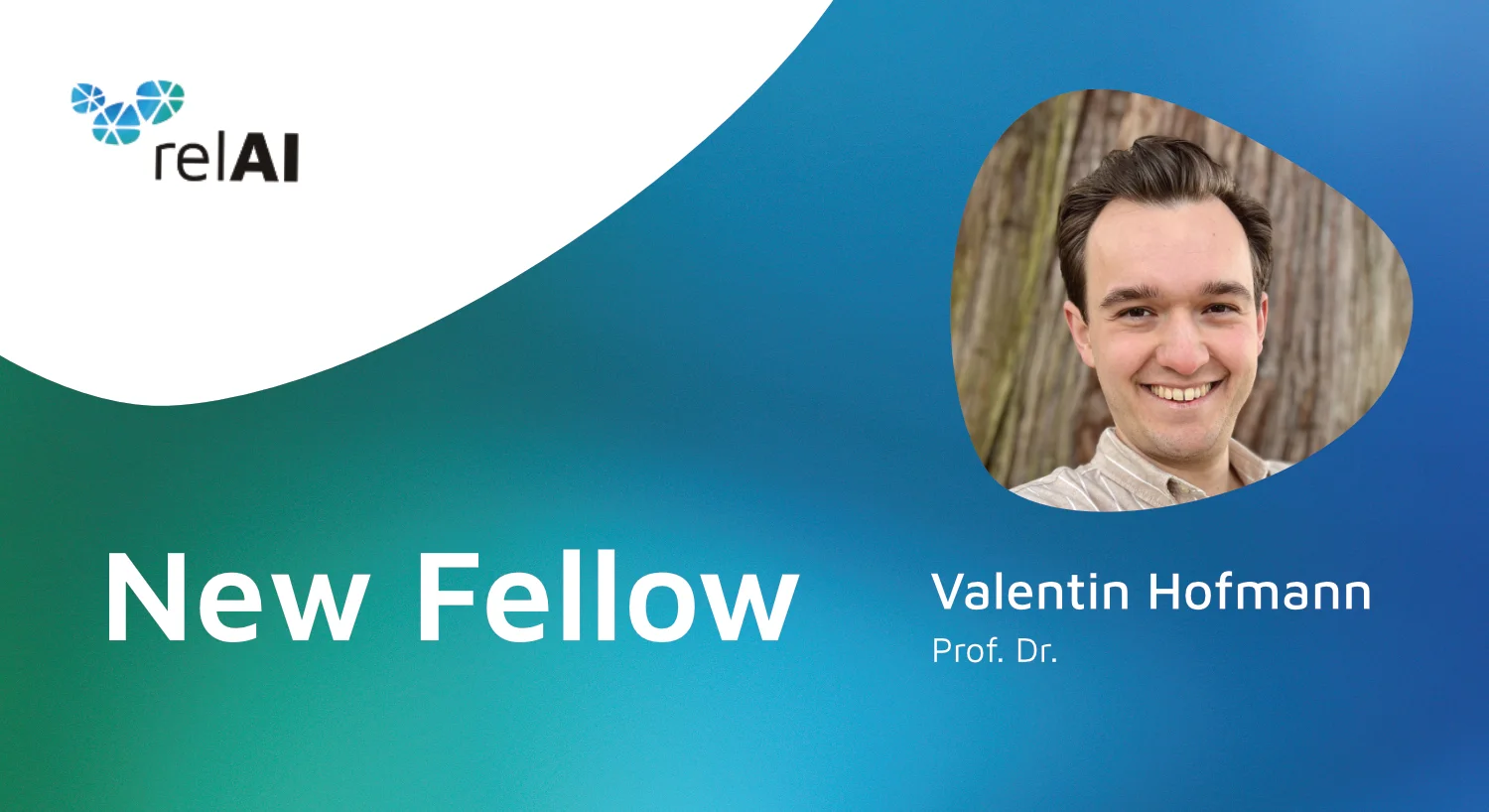
🙌 We warmly welcome Valentin Hofmann, an incoming tenure-track assistant professor at LMU Munich in Information and Language Processing using AI methods.

Valentin Hofmann's research lies at the intersection of AI, natural language processing, and computational social science. A primary focus of his work is to enhance the robustness, safety, and fairness of large language models, particularly regarding social biases and their implications for reliable AI.

His studies on large language models are relevant to the relAI Research Area of 🤖 Robotics and Interactive Systems, as these models increasingly serve as essential components of interactive, human-facing AI systems, such as conversational assistants, where reliability is crucial. Furthermore, his research directly aligns with the relAI Central Themes of Safety and Responsibility by investigating and mitigating social biases and their potential risks in deployed AI language technologies. As a fellow, he will contribute to relAI through teaching, mentoring, and community activities.

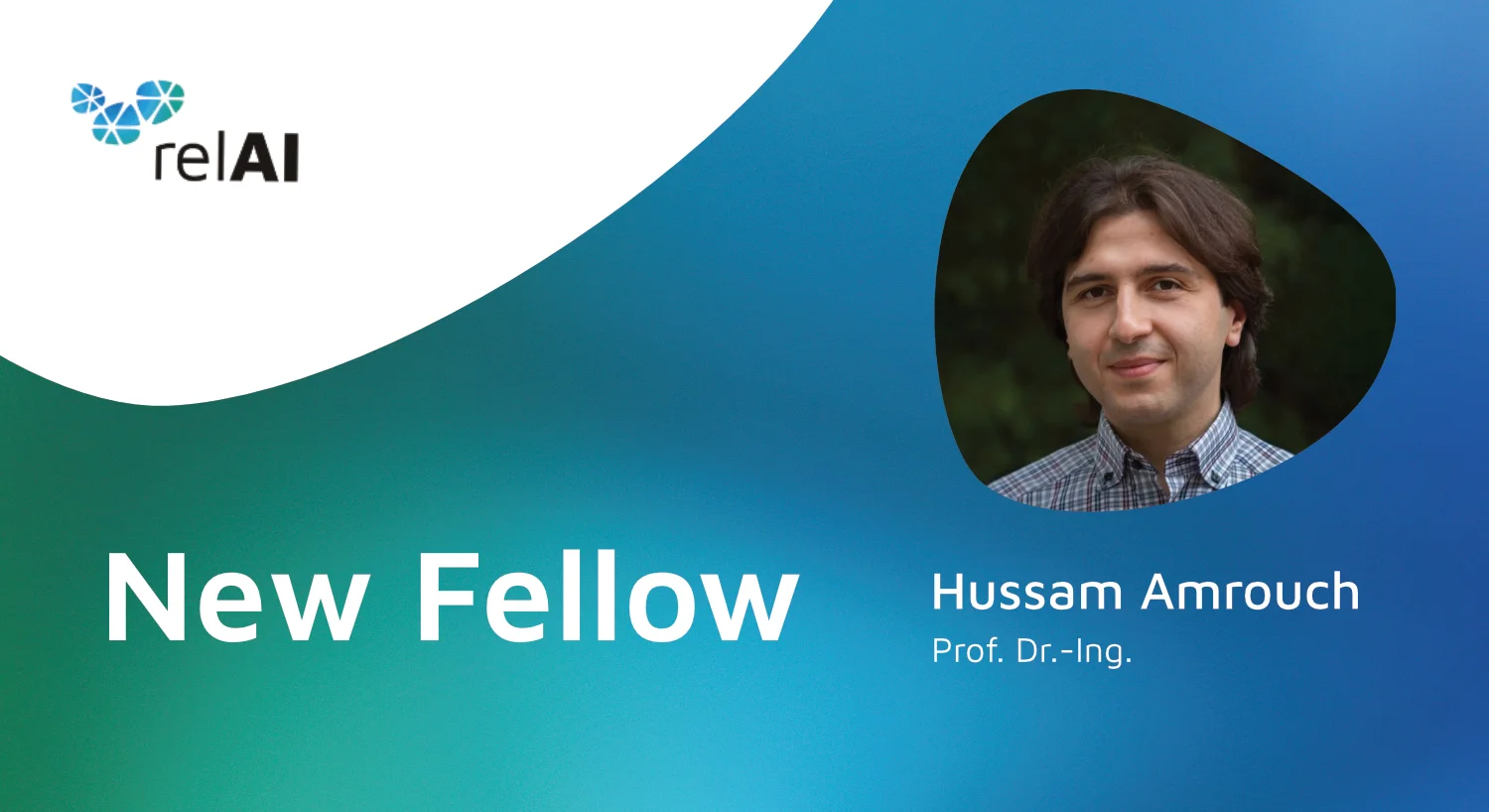
📢 We are excited to announce that Hussam Amrouch has joined relAI as a Fellow!.

About Professor Hussam Amrouch

Hussam Amrouch holds several positions at TUM, including Chair of AI Processor Design at CIT, and Head of research on Brain-inspired Computing at MIRMI. He is also the Head of the Semiconductor Test and Reliability research group at the University of Stuttgart, Germany, the Founding Director of the Munich Advanced-Technology Center for High-Tech AI Chips (MACHT-AI), and Academic Director of TUM Venture Labs for Semiconductor and Quantum.

His key research interests are focused on ultra-efficient AI chips, advanced technologies, novel computing architectures for AI acceleration, machine learning for EDA, advanced technologies, cryogenic CMOS, emerging beyond- CMOS technologies, privacy and security. His research aligns strongly and naturally with the core mission of relAI, particularly its central themes of security, privacy, and reliability, as well as its application-driven focus on trustworthy AI systems. While relAI emphasizes algorithmic and theoretical foundations, Prof. Amrouch contributes a complementary and essential hardware-level perspective, addressing reliability not only at the software or model level, but at the physical, architectural, and system layers of AI.

Contribution to relAI

Prof. Hussam Amrouch is committed to making sustained contributions to the relAI program through research supervision, teaching, training, and community-building. His involvement will strengthen relAI’s interdisciplinary profile by integrating hardware-aware, security-focused, and energy-efficient AI perspectives into both doctoral education and research.

🔊 Zeynep Akata has joined relAI as a Fellow!.

About Professor Zeynep Akata

Zeynep Akata is a Liesel Beckmann Distinguished Professor of Computer Science at TUM and the Director of the Institute for Explainable Machine Learning at Helmholtz Munich.

Her research focuses on explainability-guided model adaptation, bias detection and mitigation, mechanistic interpretability, and continual learning—all of which are central challenges for reliable AI. Methodologically, her work spans representation learning, interpretability diagnostics, model consolidation, and evaluation under distribution shift 📈, with close connections to real-world applications in medical imaging and clinical decision support.

Contribution to relAI

As a relAI Fellow, she will contribute to the relAI Curriculum through lectures, mentoring students, supporting relAI events, and participating in strategic discussions on evaluation standards and benchmarks for reliable AI.

👋 relAI warmly welcomes our new Fellow, Björn Eskofier. He has recently joined LMU, focusing on AI-supported therapy decisions. Previously, he held the Chair of Machine Learning and Data Analytics at Friedrich-Alexander University Erlangen-Nuremberg. His research aligns with the central themes of relAI, namely safety, security, privacy, and responsibility within the Medicine and Healthcare relAI research area 🩺.

As a relAI Fellow, he will contribute to the relAI Curriculum through lectures, mentoring, supporting relAI students, and participating in relAI events.

📢 relAI is excited to announce that LMU Professor Falk Schwendicke has joined our school.

About Professor Falk Schwendicke

Professor Schwendicke is Director of the Poliklinik für Zahnerhaltung, Parodontologie und digitale Zahnmedizin at the LMU Klinikum. He brings extensive experience in applying and evaluating AI solutions in dental diagnostics, clinical decision-making, and public health. His research aligns perfectly with relAI’s focus on developing reliable, trustworthy, and human-centered AI. He develops and evaluates AI models for clinical settings, where performance, interpretability, and safety are critical. His work emphasizes important topics such as multimodal learning, explainability, fairness, and generalizability. This includes benchmarking algorithms and addressing dataset biases.

Contribution to relAI

As a relAI fellow, Professor Schwendicke will actively contribute through lectures, seminars, mentoring students, and supporting various relAI events.

relAI warmly welcomes TUM Professor Alexander König to our school. Prof. König is the Interim Head of the Chair of Robotics and System Intelligence and the Scientific Lead of Project Geriatronics at the Technical University of Munich.

His work sits at the intersection of medicine & healthcare and robotics & interacting systems, directly addressing the central themes of our program: Safety, Security, Privacy, and Responsibility. He follows two main research directions: i. Translating AI-controlled robotic technology from laboratory to patient, to investigate the real-world effects of AI and robotics on healthcare and caregiving. ii. Using AI and robotics to understand how aging affects cognitive abilities and motor control in the elderly, with the aim of optimizing quality of life through technology.

He will contribute to relAI through lectures and workshops on medical technology and robotics, teaching young scientists the path toward real-world application of their ideas with patients. Additionally, his insights on conducting user studies, navigating CE certification processes, and developing commercialization strategies through startups will further enrich research at relAI.

The European legal initiative to regulate AI (Artificial Intelligence Act) poses a particular challenge to small and medium-sized enterprises (SMEs) and start-ups that want to benefit from artificial intelligence and pursue innovations. Bavarian AI Act Accelerator, a new project funded by the Bayerisches Staatsministerium für Digitales and coordinated by the appliedAI Institute for Europe gGmbH, is designed to support companies in fulfilling the new requirements and, therefore, lower barriers to the use of artificial intelligence.

Principal contributors of the project include relAI directors Prof. Dr.  Gitta Kutyniok and Prof. Dr. Stephan Günnemann,  relAI fellow Prof. Dr. Mark Zöller, as well as scientists from the Technical University of Munich (TUM) and the University of Technology Nuremberg (UTN), who provide the necessarily high degree of interdisciplinarity.

relAI director Prof. Dr. Gitta Kutyniok leads the scientific part of the project. One of the main goals is to develop a system for automatic, and hence easy and fair, verification with the EU AI Act. This requires the following steps:
🔹Derive a profound legal understanding of the different terminologies.
🔹Develop a formalization/mathematization of the articles.
🔹 Build a system for automatic verification.

🛫 Our director, Gitta Kutyniok, gave a talk and joined the panel discussion at the Kick-Off event last week (photo) as the scientific lead of the project.   

Excerpts taken from:

relAI warmly welcomes LMU Professor David Rügamer to our school. David heads the Data Science Group at LMU, and he is also a Principal Investigator at the Munich Center for Machine Learning (MCML).

Prof. Rügamer works on fundamental topics within the relAI research area Mathematical and Algorithmic Foundations applied to neural networks, such as symmetries, sparsity, and uncertainty quantification in deep neural networks. Additionally, his work is also relevant to the Algorithmic Decision-Making relAI research topic. relAI will benefit from his research experience and, furthermore, from his contributions to our Curriculum, including lectures..