relAI welcomes new Fellow Valentin Hofmann

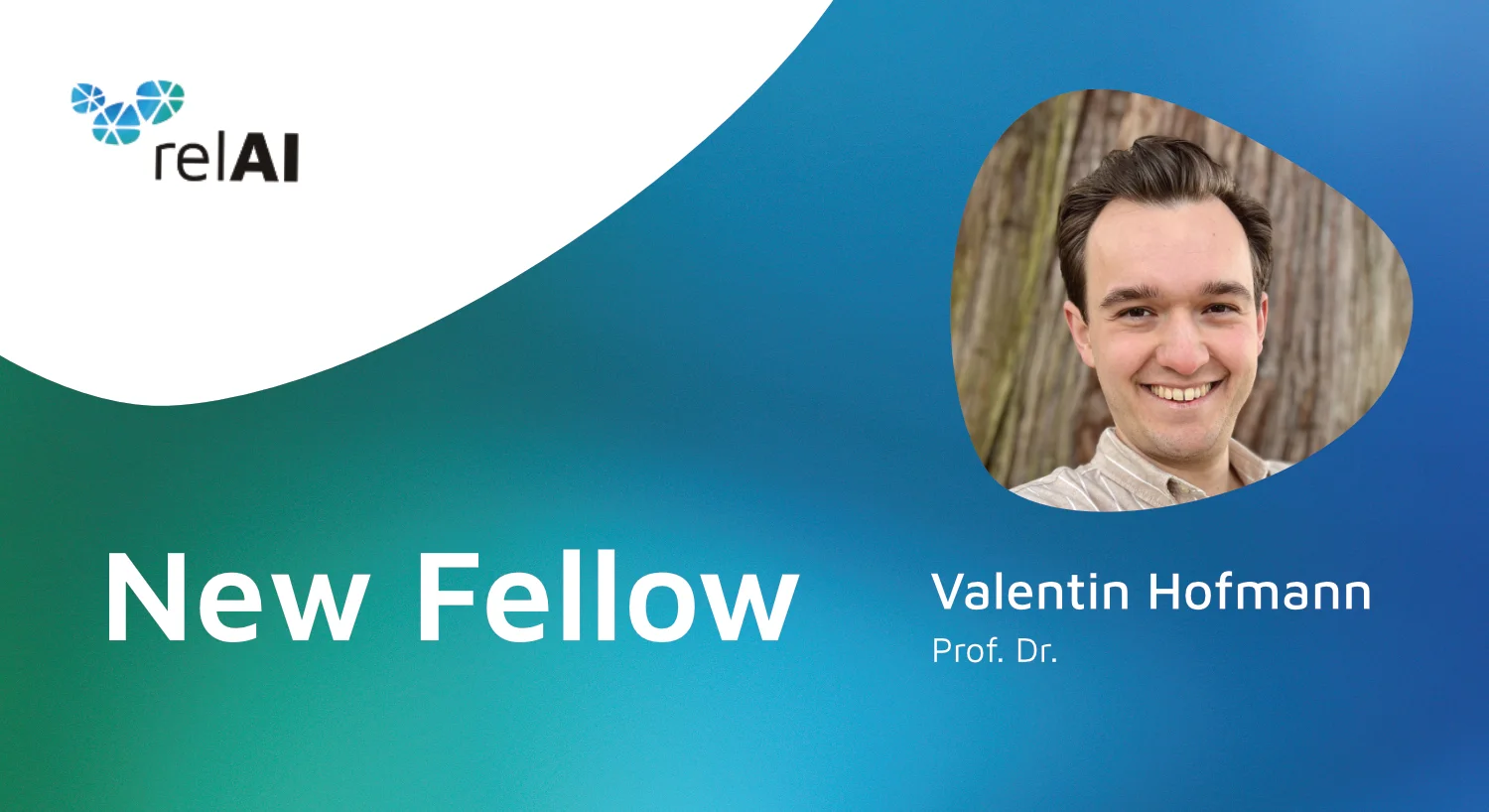
🙌 We warmly welcome Valentin Hofmann, an incoming tenure-track assistant professor at LMU Munich in Information and Language Processing using AI methods.

Valentin Hofmann's research lies at the intersection of AI, natural language processing, and computational social science. A primary focus of his work is to enhance the robustness, safety, and fairness of large language models, particularly regarding social biases and their implications for reliable AI.

His studies on large language models are relevant to the relAI Research Area of 🤖 Robotics and Interactive Systems, as these models increasingly serve as essential components of interactive, human-facing AI systems, such as conversational assistants, where reliability is crucial. Furthermore, his research directly aligns with the relAI Central Themes of Safety and Responsibility by investigating and mitigating social biases and their potential risks in deployed AI language technologies. As a fellow, he will contribute to relAI through teaching, mentoring, and community activities.
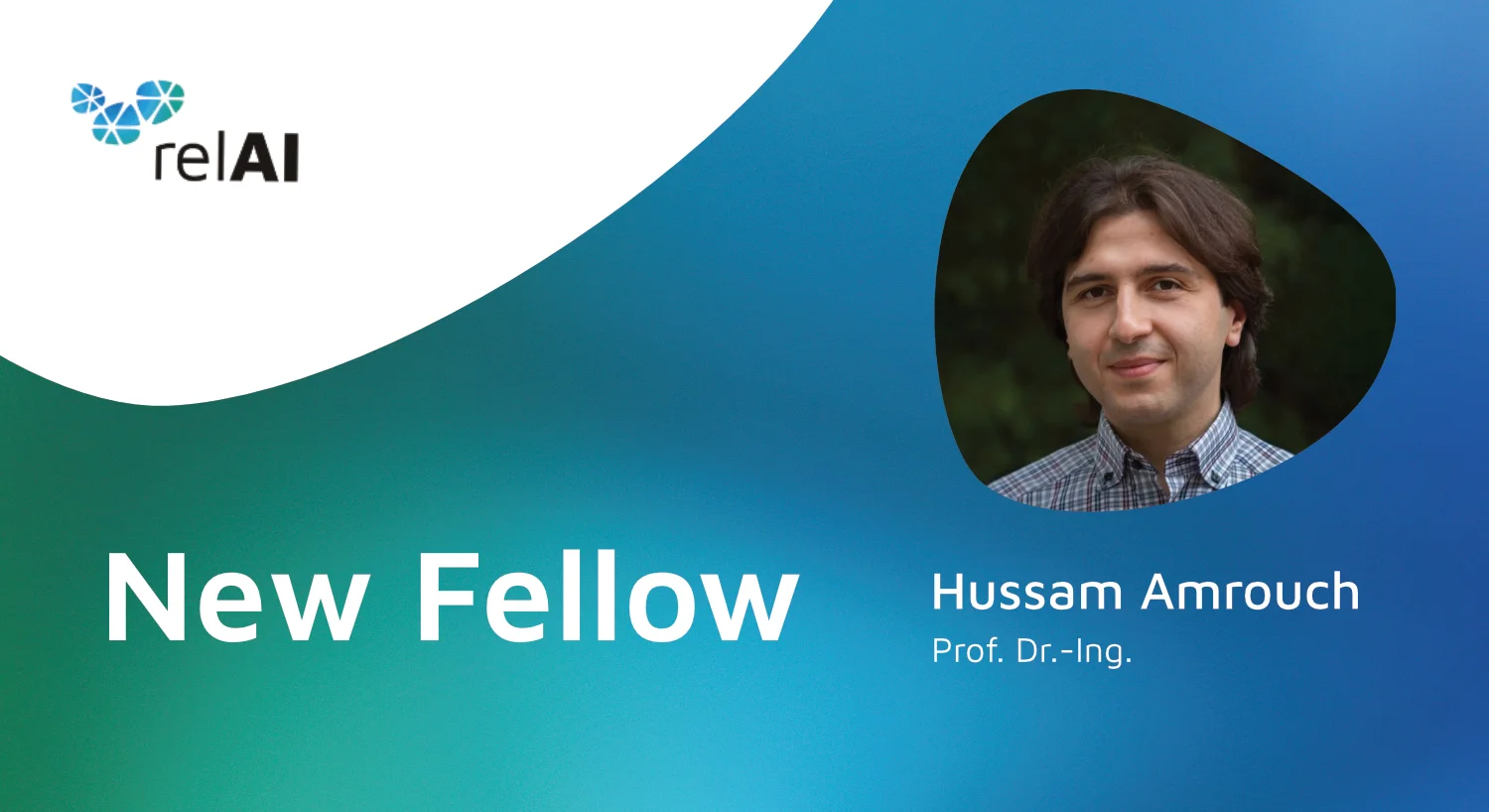
📢 We are excited to announce that Hussam Amrouch has joined relAI as a Fellow!.

About Professor Hussam Amrouch

Hussam Amrouch holds several positions at TUM, including Chair of AI Processor Design at CIT, and Head of research on Brain-inspired Computing at MIRMI. He is also the Head of the Semiconductor Test and Reliability research group at the University of Stuttgart, Germany, the Founding Director of the Munich Advanced-Technology Center for High-Tech AI Chips (MACHT-AI), and Academic Director of TUM Venture Labs for Semiconductor and Quantum.

His key research interests are focused on ultra-efficient AI chips, advanced technologies, novel computing architectures for AI acceleration, machine learning for EDA, advanced technologies, cryogenic CMOS, emerging beyond- CMOS technologies, privacy and security. His research aligns strongly and naturally with the core mission of relAI, particularly its central themes of security, privacy, and reliability, as well as its application-driven focus on trustworthy AI systems. While relAI emphasizes algorithmic and theoretical foundations, Prof. Amrouch contributes a complementary and essential hardware-level perspective, addressing reliability not only at the software or model level, but at the physical, architectural, and system layers of AI.

Contribution to relAI

Prof. Hussam Amrouch is committed to making sustained contributions to the relAI program through research supervision, teaching, training, and community-building. His involvement will strengthen relAI’s interdisciplinary profile by integrating hardware-aware, security-focused, and energy-efficient AI perspectives into both doctoral education and research.

🔊 Zeynep Akata has joined relAI as a Fellow!.

About Professor Zeynep Akata

Zeynep Akata is a Liesel Beckmann Distinguished Professor of Computer Science at TUM and the Director of the Institute for Explainable Machine Learning at Helmholtz Munich.

Her research focuses on explainability-guided model adaptation, bias detection and mitigation, mechanistic interpretability, and continual learning—all of which are central challenges for reliable AI. Methodologically, her work spans representation learning, interpretability diagnostics, model consolidation, and evaluation under distribution shift 📈, with close connections to real-world applications in medical imaging and clinical decision support.

Contribution to relAI

As a relAI Fellow, she will contribute to the relAI Curriculum through lectures, mentoring students, supporting relAI events, and participating in strategic discussions on evaluation standards and benchmarks for reliable AI.

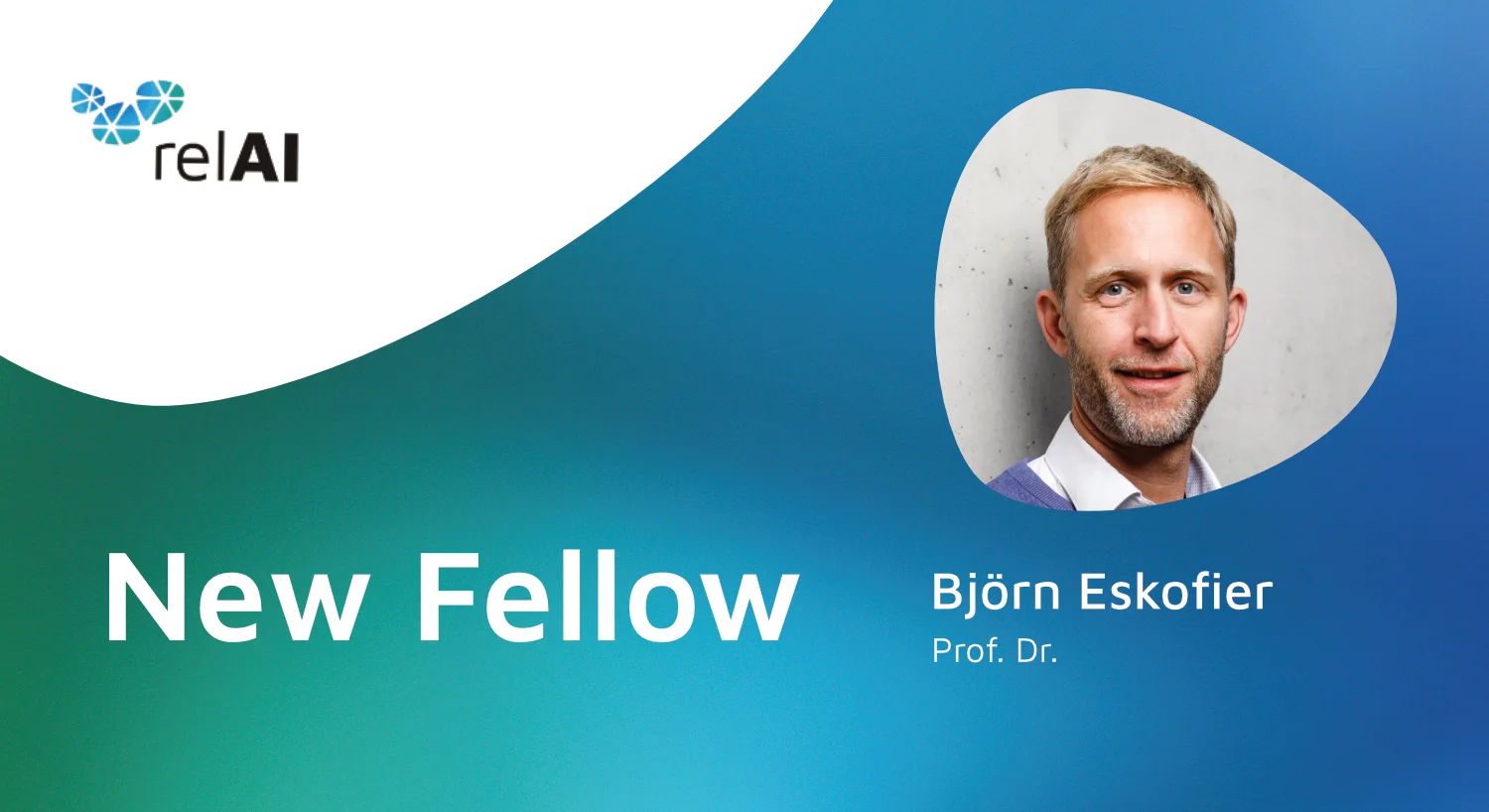
👋 relAI warmly welcomes our new Fellow, Björn Eskofier. He has recently joined LMU, focusing on AI-supported therapy decisions. Previously, he held the Chair of Machine Learning and Data Analytics at Friedrich-Alexander University Erlangen-Nuremberg. His research aligns with the central themes of relAI, namely safety, security, privacy, and responsibility within the Medicine and Healthcare relAI research area 🩺.

As a relAI Fellow, he will contribute to the relAI Curriculum through lectures, mentoring, supporting relAI students, and participating in relAI events.

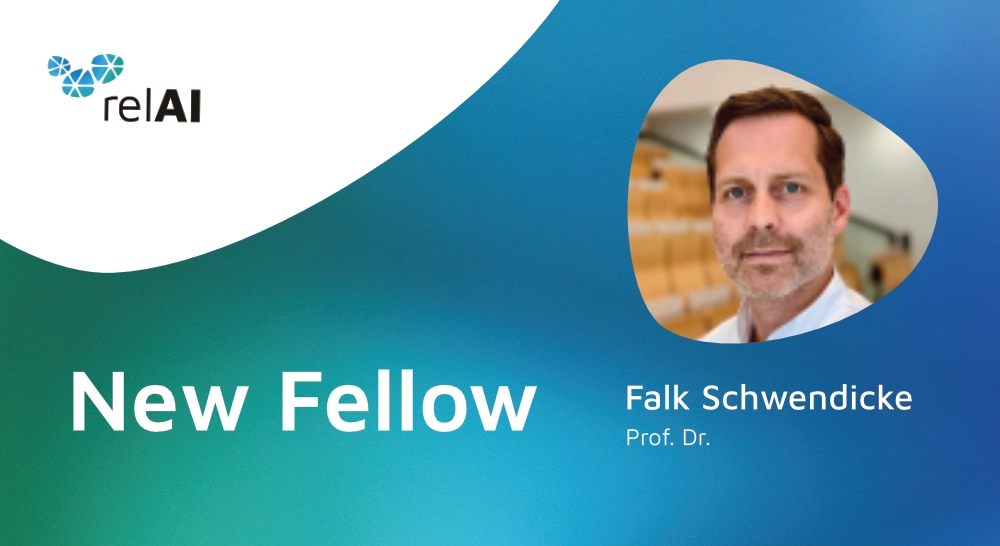
📢 relAI is excited to announce that LMU Professor Falk Schwendicke has joined our school.

About Professor Falk Schwendicke

Professor Schwendicke is Director of the Poliklinik für Zahnerhaltung, Parodontologie und digitale Zahnmedizin at the LMU Klinikum. He brings extensive experience in applying and evaluating AI solutions in dental diagnostics, clinical decision-making, and public health. His research aligns perfectly with relAI’s focus on developing reliable, trustworthy, and human-centered AI. He develops and evaluates AI models for clinical settings, where performance, interpretability, and safety are critical. His work emphasizes important topics such as multimodal learning, explainability, fairness, and generalizability. This includes benchmarking algorithms and addressing dataset biases.

Contribution to relAI

As a relAI fellow, Professor Schwendicke will actively contribute through lectures, seminars, mentoring students, and supporting various relAI events.

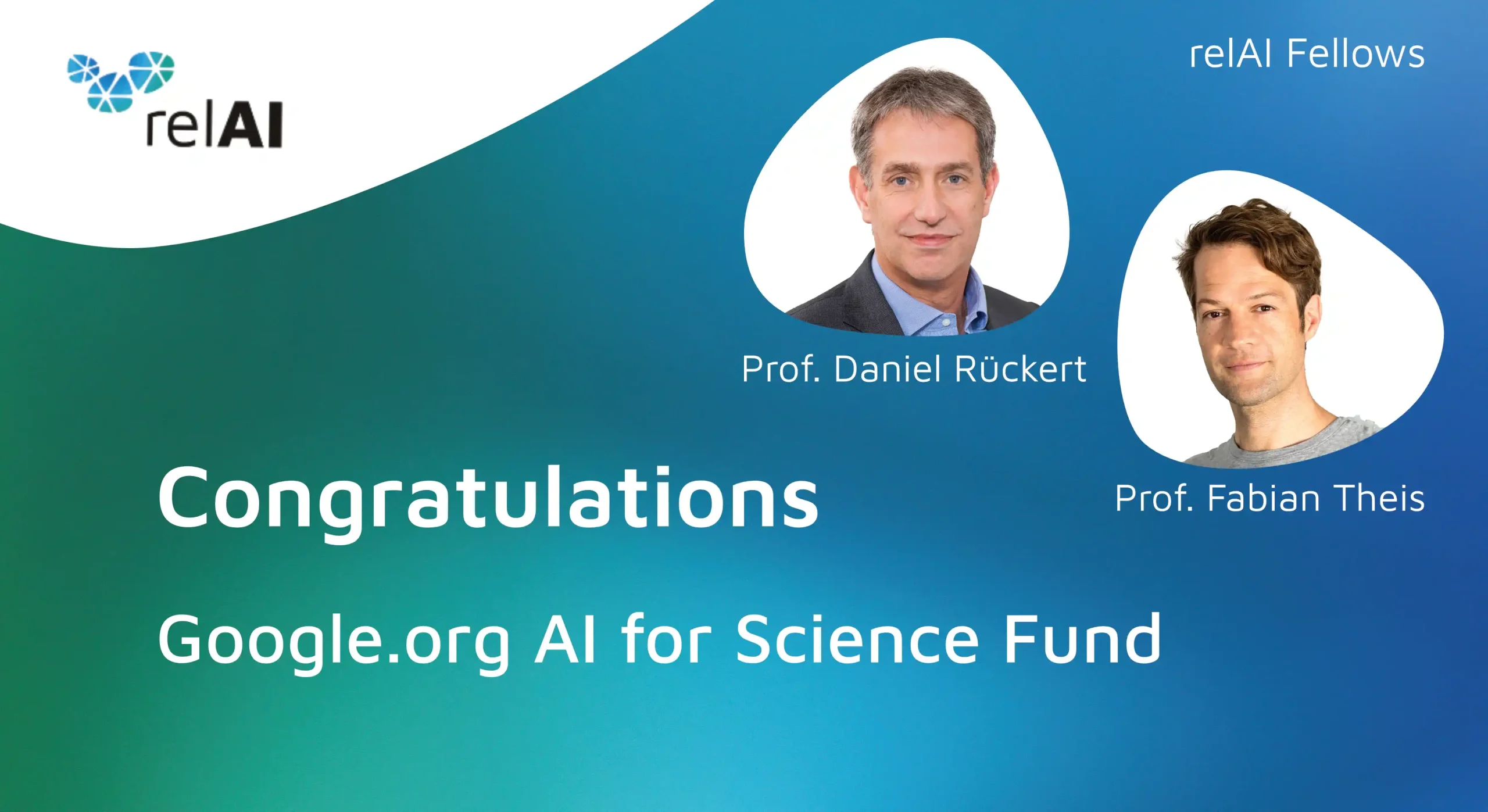
🎉 Congratulations to our relAI Fellows Daniel Rueckert and Fabian Theis 💐

Google.org, the philanthropic arm of Google, has announced the twelve recipients for its $20 million AI for Science fund. This initiative aims to accelerate research in health, agriculture, biodiversity, and climate.

The Technische Universität München is among the organizations that received funding to advance health research. TUM Professors and relAI Fellows Daniel Rückert and Fabian Theis will developa multiscale foundation model connecting individual cells to entire organs. This model will let clinicians simulate disease progression and evaluate potential treatments in a digital environment.

We look forward to following the project's development!

👉 More information on the following links:


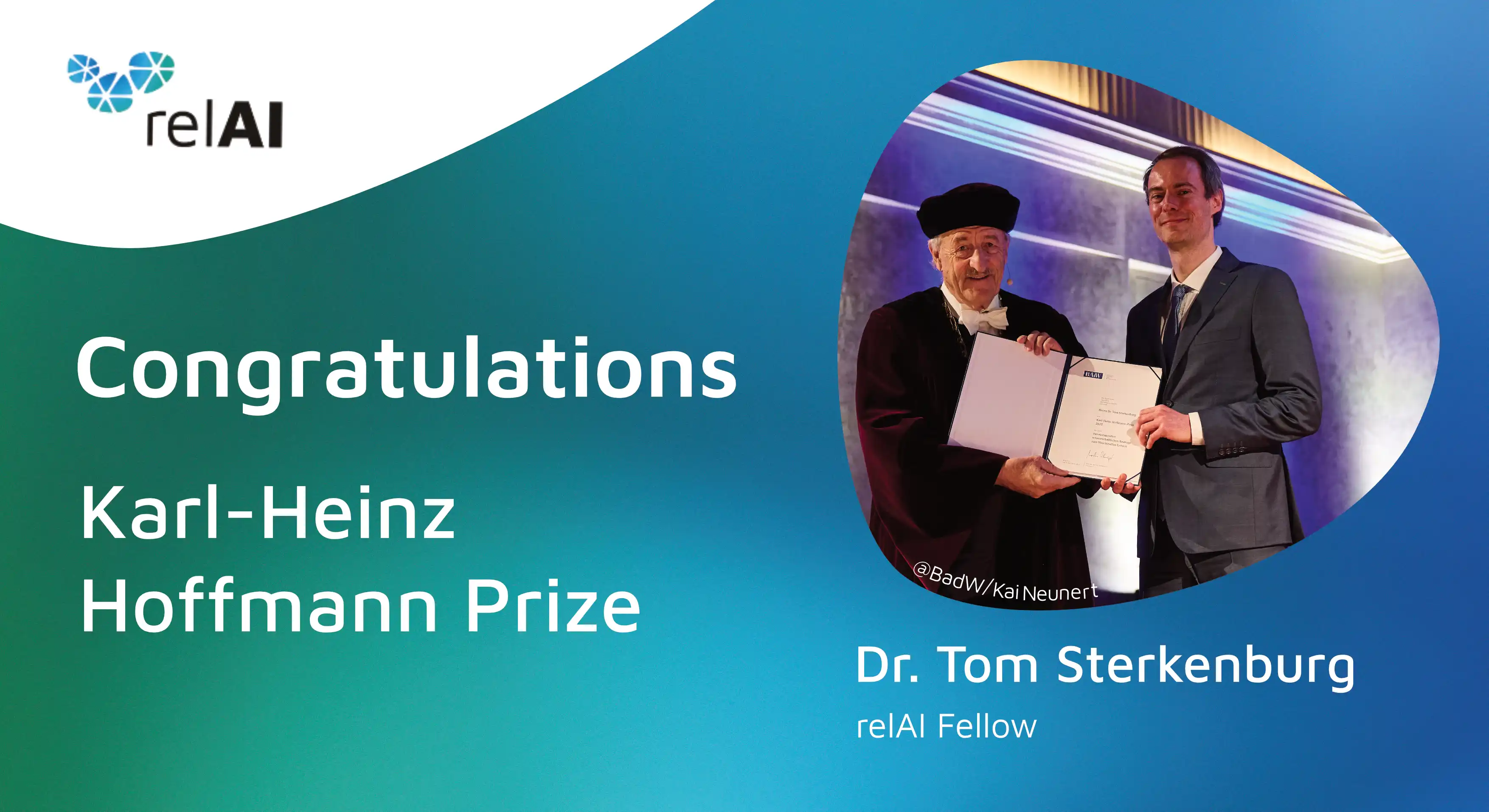
🎉We are thrilled to share that relAI Fellow Tom Sterkenburg has been awarded the 2025 Karl-Heinz Hoffmann Prize by the Bavarian Academy of Sciences and Humanities (BAdW). The Award was presented by the president, Markus Schwaiger, at the Academy’s Ceremonial Annual Meeting on 6 December.

The BAdW is a non-university research institution and a community of scholars dedicated to conducting innovative, long-term research that primarily aims to preserve cultural heritage in the humanities. It provides a unique platform in Bavaria for intergenerational networking among top researchers. A key aspect of promoting the younger generation is the annual science prizes.

The Karl-Heinz Hoffmann Prize, donated by the Ulrich L. Rohde family, is awarded alternately in the fields of humanities and natural sciences. Tom Sterkenburg works at the intersection of philosophy, statistics, and computer science. His work combines mathematical modelling, algorithmic simulation, and philosophical analysis to provide new insights into the classic problem of induction, particularly in the context of machine learning. In this way, he is making a groundbreaking contribution to the dialogue between philosophy and data-driven science.

Congratulations!

More Information:

https://badw.de/die-akademie/presse/pressemitteilungen/pm-einzelartikel/detail/generationenuebergreifende-spitzenforschung-wissenschaftspreise-der-badw-wuerdigen-herausragende-leistungen.html

🎉Congratulations!

We are thrilled to announce that Frauke Kreuter, a relAI Fellow and member of the relAI Steering Committee, has been selected as the recipient of the 2026 Waksberg Award. This prestigious award recognizes her significant impact on survey methodology and her role in training the next generation of researchers.

The Waksberg Award is presented by the American Statistical Association and by Statistics Canada's Survey Methodology journal to honor outstanding contributions to survey statistics and methodology.

As part of this recognition, Frauke Kreuter will deliver the Waksberg Invited Address at the Statistics Canada Symposium in 2026 and will also publish a paper in the December 2026 issue of Survey Methodology.

More Information:

https://www.lmu.de/ai-hub/en/news-events/all-news/news/prof.-dr.-frauke-kreuter-wins-2026-waksberg-award.html

🎉 Congratulations!

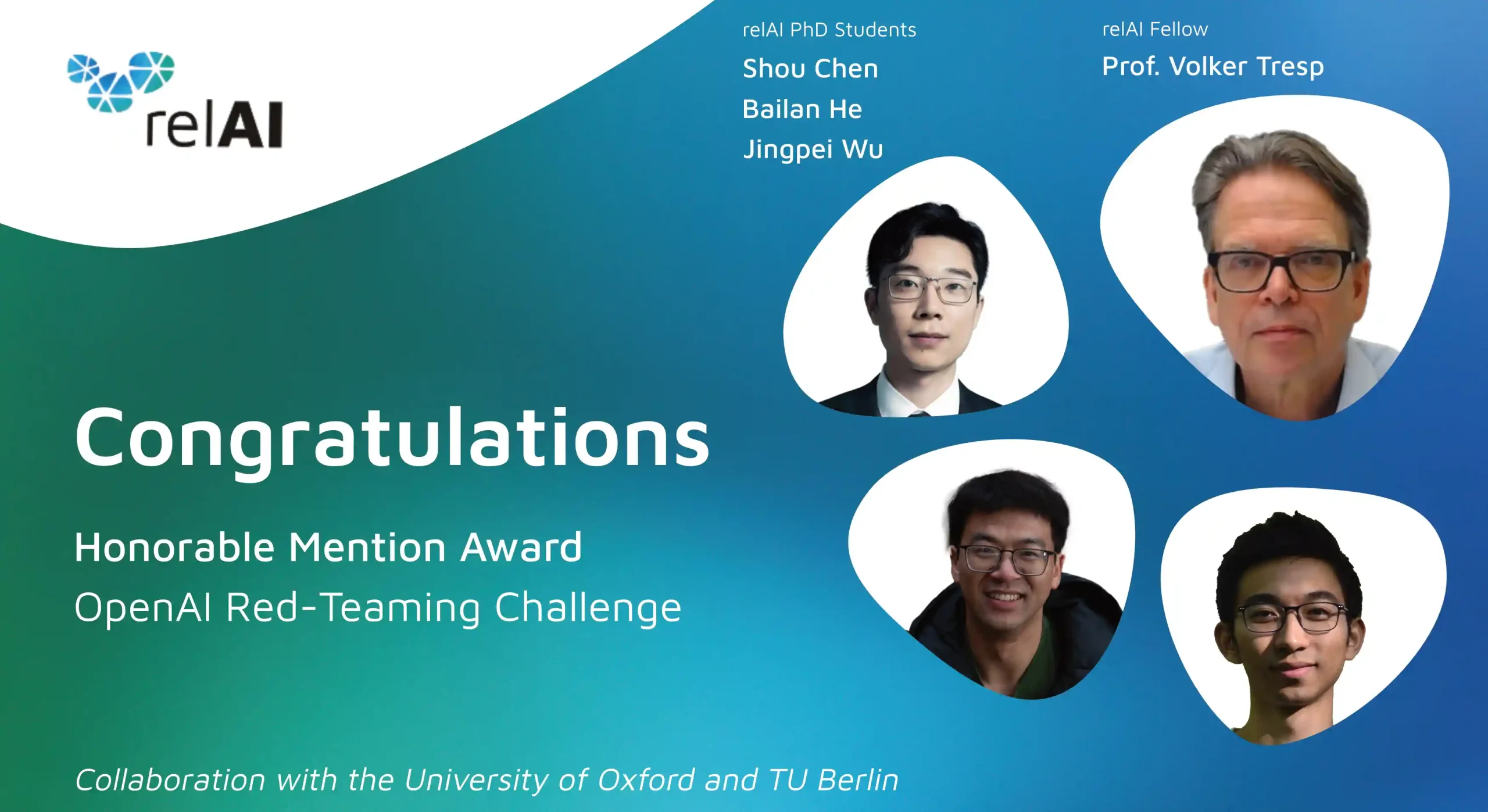
We are excited to announce that a team consisting of relAI PhD students Shuo Chen, Bailan He, and Jingpei Wu, along with relAI Fellow Volker Tresp and members of the Torr Vision Group from the University of Oxford and TU Berlin, received the Honorable Mention Award at OpenAI Red-Teaming Challenge on Kaggle.  They ranked among the top 20 teams (Top 3%) out of 5,911 participants and over 600 teams.

The Red Teaming Challenge, initiated by OpenAI, tasked participants with probing its newly released open-weight model, gpt-oss-20b. The objective was to identify previously undetected vulnerabilities and harmful behaviors, such as lying, deceptive alignment, and reward-hacking exploits.

Would you like to learn more about the awarded work?

The write-up of the hackathon and the accompanying paper, “Bag of Tricks for Subverting Reasoning-Based Safety Guardrails,” detail the findings of the study, revealing systemic vulnerabilities in recent reasoning-based safety guardrails like Deliberative Alignment.

👉 Check them out: https://chenxshuo.github.io/bag-of-tricks/

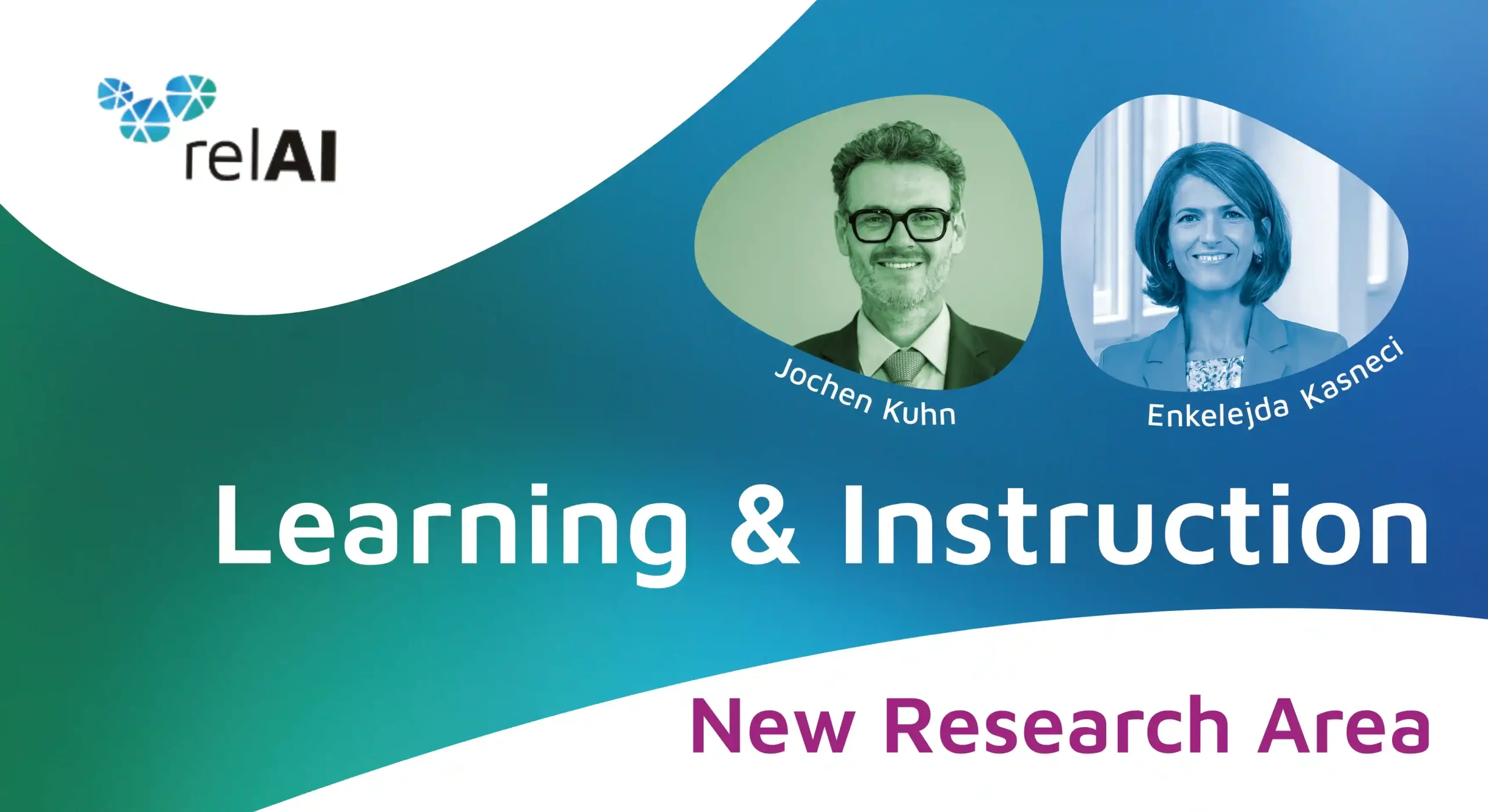
Education is a crucial societal priority and a strategic focus for the application of reliable AI. To address this, relAI has introduced a new research area: Learning & Instruction. This initiative will be led by relAI fellows Prof. Jochen Kuhn from LMU and Prof. Enkeledja Kasneci from TUM, both of whom are experts in educational technology. 

Learning & Instruction focuses on exploring how reliable AI can be used to transform education in meaningful and responsible ways. It investigates the potential of intelligent tutoring systems, adaptive feedback, and digital learning assistants to personalize learning paths and provide targeted support. At the same time, it examines the broader effects of AI on teaching and learning: how AI systems shape learner motivation, teacher roles, and the dynamics of human-AI collaboration. 

By bringing together expertise from artificial intelligence, learning sciences, and educational research, Learning & Instruction aims to develop robust and trustworthy AI applications that not only advance technology, but also serve pedagogical goals and democratic values. .